


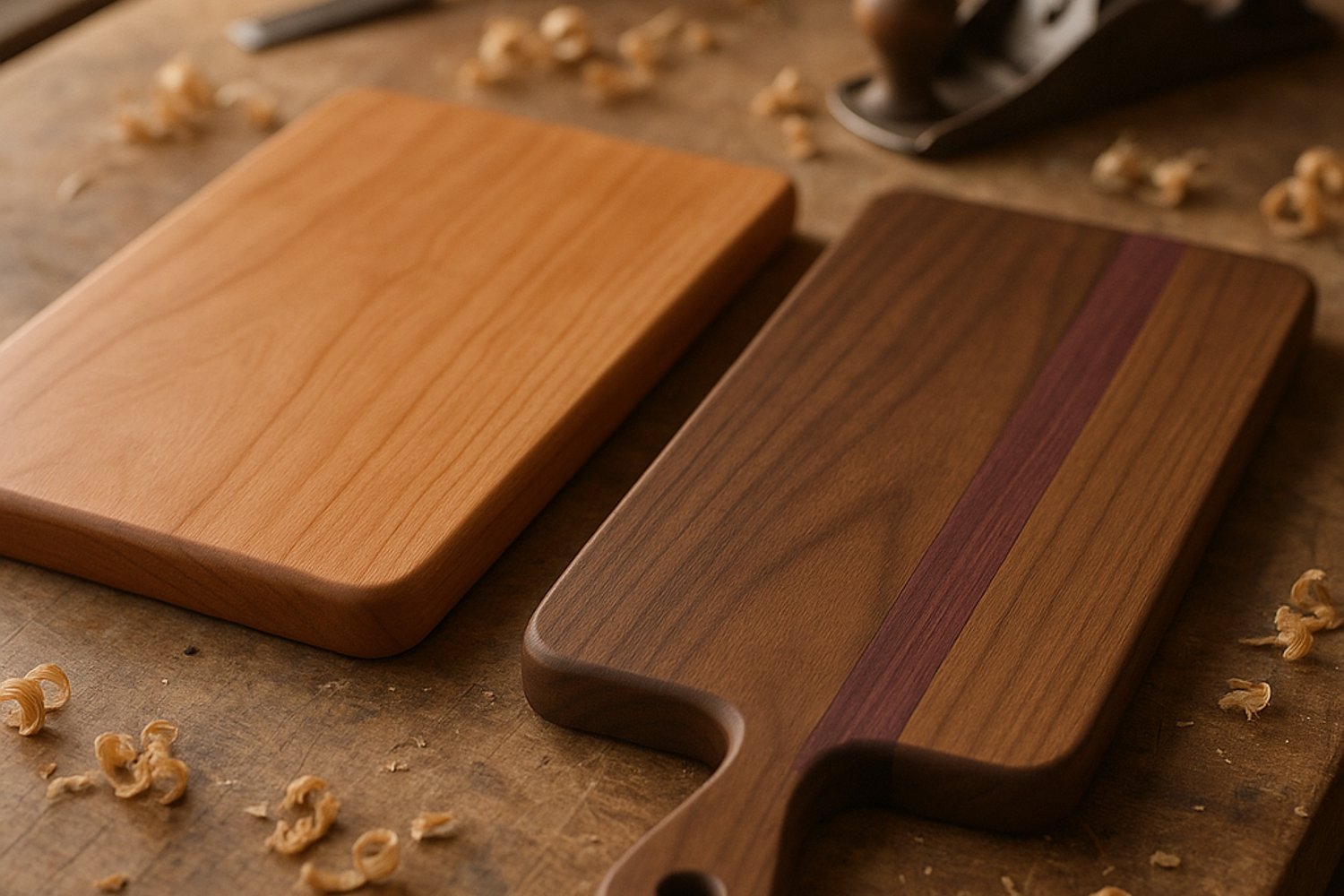
Cherry Wood Darkening and Purpleheart's Color Shift: What to Expect
Set a freshly made cherry board near a sunny window and come back a week later—you’ll likely spot a gentle “tan line” where a spoon or towel rested. Move a purpleheart-accented serving board into brighter light, and its color may deepen or drift toward brown. Wood doesn’t freeze at the color it had on day one. It evolves. Here’s why cherry and purpleheart change so noticeably, and how to guide that shift in pieces you live with every day.
What’s happening inside the wood fibers
Two main forces drive visible color change in hardwoods: light (especially UV) and oxygen. Together they trigger chemical reactions in the wood’s natural compounds—primarily lignin and various extractives—that alter how the surface reflects light.
Cherry (domestic hardwood): Cherry starts light—blond to pale russet—and warms quickly through photo-oxidation. Sunlight energizes the surface; oxygen finishes the job. The result is the familiar shift toward a richer amber-brown with smooth, even grain showing a little more contrast. This change is most noticeable in the first few weeks and months, then slows as the color stabilizes.
Purpleheart (exotic hardwood): Purpleheart has a naturally vivid purple tone with a uniform, fine grain. Freshly surfaced, it may look brownish. With initial light exposure, it “blooms” purple. Over longer periods—especially with stronger UV and heat—it can drift darker, taking on deep brown or plum tones. That later darkening is normal and varies with how the piece is used and displayed.
Light, oxygen, and heat: the big three
Think of color change as a sliding scale controlled by three everyday factors:
- Light (UV and visible): Direct sun speeds both cherry’s darkening and purpleheart’s shift. Indirect daylight still moves the needle, just more gently.
- Oxygen: Air exposure matters most early on, especially right after sanding or planing when fresh fibers are open to the environment.
- Heat: Warmer conditions accelerate reactions. A purpleheart trivet that regularly sees hot pans will likely deepen faster than a bookshelf accent in a cool hallway.
That’s why you’ll sometimes see “shadowing” under a bowl left on a cherry board or frame. The covered area simply received less light.
Finish choices: showcase or slow the shift
Finish acts like a lens and a light filter. Different approaches change how quickly color moves—and how the grain looks along the way.
Food-contact items (cutting and serving boards): For kitchen use, a food-safe oil-and-wax finish is the standard. It penetrates, brings out natural tone, and remains easy to refresh. On cherry, oil adds a warm glow that dovetails with its natural darkening. On purpleheart, oil can intensify the purple early on; over time the board will still mellow as it sees light and heat from daily use.
Boxes and décor: For non-food pieces, a hand-rubbed oil finish gives a natural matte sheen and emphasizes grain movement. A protective clear finish—especially one with UV inhibitors—can slow color change and protect surfaces in bright rooms. Clear coats vary: some lean warm, others stay neutral. Warmer films will nudge cherry deeper; neutral films help purpleheart hold its hue a bit longer.
No finish completely stops color evolution. The goal is to choose the look you prefer on day one and the path you’re comfortable living with for the years after.
What to expect from other shop-favorite species
Color change spans all hardwoods, just more subtly in some. Maple (pale cream with subtle, closed grain) tends to amber softly with light. Walnut (rich brown with deep, natural grain movement) can lighten slightly as its surface oxidizes. Padauk (orange-red base tones) and canarywood (golden with varied streaking) gently deepen. Mahogany (medium, warm tone) warms and gains depth. Leopardwood shows distinctive flecking that becomes more pronounced as finishes add contrast. Hickory’s contrasty sapwood and heartwood remain bold, though the palette warms a touch over time.
Simple ways to guide cherry darkening and purpleheart color
Whether you want an even, gradual change or hope to keep early-day color longer, a few small habits make a difference:
- Rotate early: For the first month or two, move objects resting on a cherry board or box lid so light reaches the full surface. This helps avoid shadow outlines.
- Ease into sun: If you’d like cherry to deepen faster, give it a few short sessions in indirect daylight rather than a full day of direct sun. Steady exposure yields more uniform results.
- Mind the heat: For purpleheart, limit prolonged high heat (like leaving a hot pot on a trivet). Heat plus UV will push the color darker sooner.
- Pick a finish with intent: Oil-and-wax for kitchen boards keeps maintenance simple. For boxes or décor in bright spaces, a clear finish with UV inhibitors can slow shifts while keeping the surface protected.
- Refresh when dry: On boards, re-apply a food-safe oil-and-wax when the surface looks pale or feels dry to the touch. An oiled surface absorbs and reflects light more evenly.
- Store thoughtfully: If a piece lives in a cabinet or shaded corner, expect slower change. When moving it into brighter light after months, rotate and give it time to even out.
Real-world scenarios from the shop bench
We see the same patterns over and over in small-batch builds at Old Line Woodcraft. A cherry edge-grain cutting board starts softly blond. After a few weeks of daily meal preparation and regular wiping, it picks up that warm, amber-brown tone people love. Knife marks sit lighter at first, then blend visually as the surface deepens and you renew the oil-and-wax finish.
A serving board with a purpleheart accent stripe looks brilliantly purple right after sanding and oiling. Place it on a kitchen island with indirect light and you’ll enjoy that vivid hue for quite a while. Set it under a south-facing window or use it with hot dishes frequently, and it will lean toward a deeper, brown-plum tone sooner. Neither path is “wrong”—it’s simply the material being honest.
Managing expectations and embracing material honesty
Hardwoods are dynamic. That’s part of their charm. The point isn’t to win a fight against color change—it’s to understand it well enough to guide the process. If you love the way cherry glows after a season on the counter, give it light and a sensible oil schedule. If you want purpleheart to read more purple for longer, keep it out of prolonged direct sun and away from sustained heat, and consider a clear finish with UV inhibitors on non-food pieces.
As makers, we lean into what each species does best: warm reddish-brown cherry with smooth, even grain that deepens gracefully; naturally vivid purpleheart with consistent, fine grain that offers a striking accent and a story with time. Built with the careful workmanship Old Line Woodcraft is known for, these woods age in a way that rewards use, not just display.
Care quick-notes for boards, boxes, and décor
- Cutting and serving boards: Hand-wash, dry upright, re-oil with a food-safe oil-and-wax finish as needed. Rotate positions on the counter to avoid shadowing.
- Boxes: Dust with a soft cloth; avoid long hours of direct sun. If the piece sits near a bright window, rotate it occasionally to keep color even.
- Wall décor: Hang out of harsh, direct sunlight when possible. A protective clear finish helps the surface resist fading or darkening too quickly.
Color change tells you the piece is alive to its environment—and that’s half the pleasure of living with solid hardwood. If you’re planning a gift or a new piece for your home, consider where it will live and how you want it to age. Cherry and purpleheart both offer a satisfying arc; you just get to decide how fast to turn the page.
Curious how different species age side by side? Explore our shop and browse our latest work, and come back next week for more notes from the bench.