


Domestic vs Exotic Hardwoods: Beauty, Sourcing, and Care
Curious about the real difference between domestic and exotic hardwoods for cutting boards, boxes, and home decor? In our small-batch shop, material choice starts long before glue-up. This guide breaks down what sets each group apart in look and sourcing, how we approach selection, and simple care notes so you can choose confidently for your kitchen or home.
What domestic and exotic really mean
Domestic hardwoods are species that grow in North America and are widely available through regional mills and lumberyards. In our racks, that includes walnut, cherry, maple, and hickory. Exotic hardwoods are imported species sourced from tropical or subtropical regions. We often work with purpleheart, padauk, canarywood, leopardwood, and select mahogany boards.
Both groups are real hardwoods. The difference lies in geography, grain character, color, and the logistics of responsible sourcing.
Visual character: color, grain, and contrast
Domestic hardwoods offer a grounded palette with familiar warmth. Maple reads as pale cream with a subtle, closed grain. Cherry brings a warm, reddish-brown tone with smooth, even grain. Walnut shows rich brown with deep, natural grain movement. Hickory leans light to medium with lively contrast between earlywood and latewood.
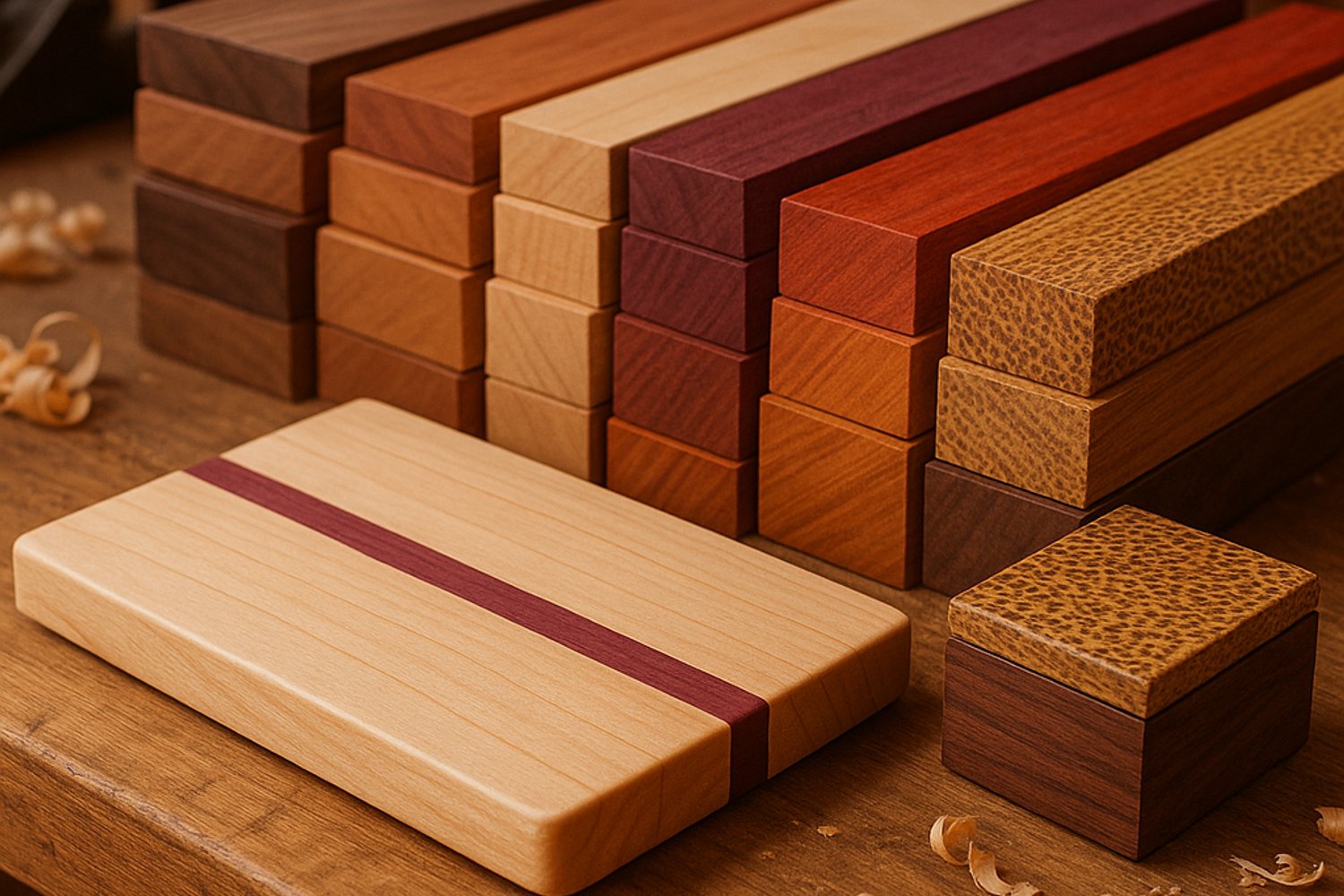
Exotic hardwoods can introduce bolder color and striking figure. Purpleheart arrives naturally vivid purple with consistent, fine grain. Padauk leans orange-red with darker streaking. Canarywood brings golden to yellow-brown tones with varied lines of color. Leopardwood is known for its distinctive flecked figure that catches light across the surface. Select mahogany boards present medium to reddish-brown with a gentle, even grain.
In small-batch work, we often pair a calm domestic base with an exotic accent to achieve clean contrast without visual noise. A pale maple cutting or serving board with a narrow purpleheart stripe, or a walnut box body with a leopardwood lid panel, are common ways we balance attention and restraint.
Responsible sourcing and what to ask
Sourcing is where domestic vs exotic has practical implications. Domestic lumber typically moves through shorter supply chains with consistent grading and traceability. With exotics, longer routes and varied regulations make vendor selection more important. We keep orders modest, inspect every board in person when possible, and work with suppliers who are transparent about origin and import documentation.
If you are shopping or commissioning a piece and want to evaluate sourcing, a few simple questions go a long way:
- Ask the maker where they typically source a given species and how they evaluate stability and quality before a build.
- For imported woods, ask about country of origin and whether the supplier provides appropriate import paperwork.
- Discuss whether a domestic alternative could achieve a similar look for your use case, especially for large surfaces in high-use settings.
There is no one right answer. The goal is informed, respectful use of materials, matched to the scale of the project and the piece's purpose.
Where each excels in small-batch goods
Cutting and serving boards: Domestic species tend to shine for the main working surface. A maple or cherry edge-grain orientation gives a smooth, balanced prep surface with a clean grain-forward look. Walnut offers a deeper tone that reads refined on the counter. Exotic woods often work best as contrast accents or serving-only boards. A narrow padauk or purpleheart inlay line can provide crisp definition across a laminated surface without taking over the board.
Boxes: Accent-friendly pieces like keepsake or jewelry boxes are a natural place for exotics. A walnut or cherry box body with a canarywood or leopardwood lid adds interest through color or figure. For a more tone-on-tone approach, a mahogany body with a maple lift-off lid can be quietly elegant. Build details like mitered corners, corner splines, and a recessed bottom panel keep the profile clean and the wood front and center.
Home decor: Wall signs and small decor items can leverage both camps depending on the statement you want. A carved hardwood bowl or a routed sign in cherry or walnut reads warm and grounded. If you want a bolder accent on a shelf or entry table, a small piece in purpleheart or padauk provides that vivid note in a compact footprint.
Finish and care notes that matter
For kitchen boards, we stick with a food-safe oil-and-wax finish. It brings out color and grain without forming a hard film on the surface, and it can be easily renewed at home. Whether the board is primarily domestic species or has exotic accents, maintenance is the same: re-apply a thin coat of board oil when the surface looks dry, and avoid prolonged soaking or dishwasher exposure.
For boxes and decor, we may use a hand-rubbed oil finish or a protective clear finish to achieve a natural matte or subtle satin sheen that suits the wood's character. A few species deepen in tone with time and light. Cherry, for example, gradually moves from blond to warm amber. Purpleheart's vivid tone can shift with light exposure. If you prefer a more even, long-term color, display pieces out of direct sunlight when possible.
How we choose wood in the shop
Each board enters the shop as a candidate for a specific role. We look for straight, consistent grain in working surfaces, and we reserve highly figured or boldly colored boards for accents, lids, and serving pieces. During panel glue-up, we sequence grain for balanced movement and visual continuity, then refine the surface for a grain-forward presentation. Small-batch pacing lets us match parts across a piece so the wood feels intentional, not random.
Species is only the starting point. The individual board matters more: two pieces of walnut can have wildly different tone and grain motion. Learning to read the board and respect what it wants to be is a big part of our process at Old Line Woodcraft.
A quick guide to choosing domestic vs exotic
- For daily prep surfaces, start with domestics like maple, cherry, walnut, or hickory in edge-grain orientation; add a slim exotic inlay if you want contrast.
- Use exotics like purpleheart, padauk, canarywood, or leopardwood as accents or focal points where bold color or figure shines.
- Ask about sourcing, especially for imported woods; choose reputable suppliers and scaled, thoughtful use.
- Consider the environment: kitchen boards benefit from oil-and-wax finishes you can refresh; decor may favor a protective clear finish.
- Think about long-term color: some species evolve with light; place and care accordingly.
Domestic and exotic hardwoods both have a place in well-made, small-batch pieces. The key is pairing the right board with the right job and treating each surface with care.
Explore our shop to see how these woods come together, and come back next week for more insights from the bench.