


End Grain vs. Edge Grain Cutting Boards: Durability Explained
Choosing a Board That Lasts: Grain Orientation Matters
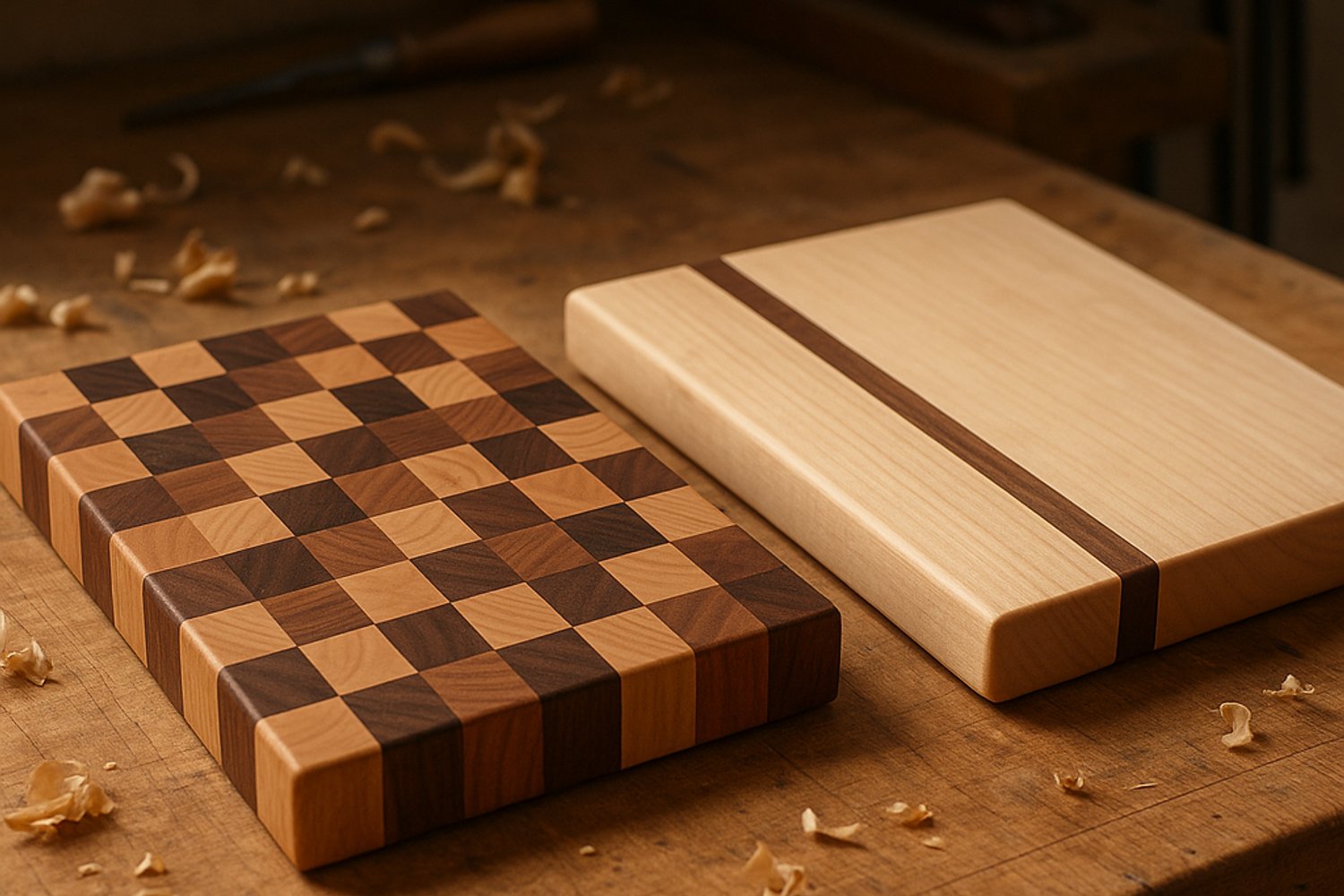
If you’re weighing end grain vs edge grain cutting boards, you’re already asking the right question. Grain orientation shapes how a board feels under your knife, how it wears over time, and how much care it needs. Here’s a clear, shop-floor breakdown from our bench at Old Line Woodcraft.
What “End Grain” and “Edge Grain” Actually Mean
Every cutting board starts as strips of hardwood glued into a single, stable panel. The difference is which face of the wood becomes the cutting surface.
- End grain cutting board: The wood fibers stand upright; you’re cutting into the ends of the fibers. Think of the board like a bundle of pencils stood on end.
- Edge grain cutting board: The wood fibers run lengthwise across the surface; you’re cutting across the edges of those fibers.
This orientation shift changes how the surface compresses, how knife marks appear, and how the board responds to moisture and movement.
Durability in Daily Use
Durability isn’t just about hardness—it's about how a surface absorbs and disperses impact.
- End grain: self-healing compression. End grain surfaces tend to let your knife slip between fibers. Those fibers compress and then rebound, which can make knife marks less visible over time. For heavy chopping, this “forgiveness” is a real advantage.
- Edge grain: evenly tough, easier to build thick. Edge grain boards resist warping well when glued properly, and they’re typically lighter for the same footprint. They’ll show knife tracks sooner, but they can take years of steady prep with routine care.
So, which lasts longer? Built well and maintained regularly, both do. In our small-batch experience, end grain better disguises wear under constant chopping. Edge grain holds up admirably for balanced, everyday prep and can be easier to handle and resurface.
Knife Friendliness
If you prize a sharper edge, end grain has the edge—literally.
- End grain: gentler on knives because the blade passes between fibers more than across them.
- Edge grain: slightly firmer feel; steel will see a bit more abrasion over time, especially with very hard species.
For most home cooks, either orientation is perfectly usable. If you break down vegetables and proteins daily, end grain can reduce sharpening intervals. If you slice, assemble, and serve more than you chop, edge grain feels crisp and precise.
Moisture, Movement, and Glue Lines
Wood moves with seasonal humidity. Good construction practices help both orientations stay flat and tight over the years.
- End grain: built from many short blocks. That mosaic has many glue lines, which spread stress well—but it’s important to keep the board oiled so the surface doesn’t dry out faster than the core.
- Edge grain: longer strips and fewer glue lines. The surface is less thirsty than end grain but still benefits from regular oiling to slow moisture exchange.
In both cases, look for solid hardwood, a stable panel glue-up, and a food-safe oil-and-wax finish. Keep boards off standing water and let both faces breathe between uses.
Cleaning and Maintenance
Day-to-day care is nearly identical: warm water, mild soap, quick rinse, towel dry, and stand the board to air dry fully. Never soak. Never run through a dishwasher.
- Re-oiling cadence: End grain usually drinks more oil. Oil when the surface looks dry or feels chalky—often every few weeks early on, then monthly or as needed. Edge grain may stretch longer between oilings.
- Waxing: A thin coat of board wax on a fully oiled surface helps slow moisture pickup and adds a natural satin feel.
- Deeper refresh: For stubborn stains or raised grain, a light pass with 220–320 grit sandpaper, followed by oil and wax, restores either surface. End grain may require a touch more sanding time because of its fiber ends.
A well-cared-for board—end grain or edge grain—earns a smooth patina and stays service-ready for years.
Weight, Footprint, and Everyday Practicality
End grain boards tend to be thicker and heavier. That mass keeps them steady during vigorous chopping, but it also means more to lift, wash, and dry. Edge grain boards of the same size are typically lighter and easier to carry to the sink or table.
If you prep in a smaller kitchen or store your board upright, pay attention to dimensions and thickness. A compact edge grain board can be a smart daily driver. If you’ve got counter space and chop a lot, a larger end grain station can become your go-to surface.
Food Safety and Finish
Both orientations are equally sound from a cleanliness standpoint when maintained properly. The key factors are prompt cleaning, full drying, and a well-maintained finish.
- Finish: For kitchen use, look for a food-safe oil-and-wax finish that penetrates and then seals with a light protective layer.
- Odors and stains: A sprinkle of coarse salt and a lemon cut side works for gentle deodorizing. For more stubborn spots, use a baking soda paste before re-oiling.
As always, separate raw protein prep from ready-to-eat items and clean promptly after use.
Choosing Wood Species for Each Orientation
Species influence look, feel, and subtle surface behavior—especially in edge grain where fibers run lengthwise.
- Maple: pale cream tones with a subtle, closed grain. A classic, knife-friendly choice that keeps a clean, bright look.
- Walnut: deep, rich brown with natural grain movement. A warm, calm cutting surface with strong visual character.
- Cherry: medium warm hue that deepens from blond to amber with light exposure over time. Smooth, even grain.
- Hickory: light to medium tones with lively contrast. Naturally tough, with a firm, crisp cutting feel.
- Purpleheart, Padauk, Canarywood: vivid accent options. Often used as narrow inlays or stripes, especially on serving-forward boards. Colors can enrich the design; apply oil carefully and wipe excess to limit early color transfer onto lighter woods like maple.
- Leopardwood: distinctive flecked figure. Typically best as an accent element rather than a primary cutting field.
Whichever species you favor, consistent grain selection and careful glue-up matter most. That’s the quiet work we focus on at Old Line Woodcraft.
Quick Decision Guide
- Choose end grain if you chop frequently, want a surface that’s gentler on knives, don’t mind extra weight, and will keep up with regular oiling.
- Choose edge grain if you want a lighter board to move and wash, prefer a crisp slicing feel, plan to serve and present on the same surface, and value easy maintenance.
Bottom Line
There’s no wrong choice between end grain and edge grain—there’s the right fit for how you cook and care for your tools. End grain shines under heavy daily prep with a forgiving surface and visual longevity. Edge grain excels as a balanced, lighter workhorse that transitions cleanly from prep to presentation.
If you’re still on the fence, think about your knife habits, storage space, and how often you’re willing to oil a board. That practical checklist usually points to the answer.
Have a question from your own kitchen? We’re always glad to share what we’ve learned at the bench—explore our shop and come back next week for more.