


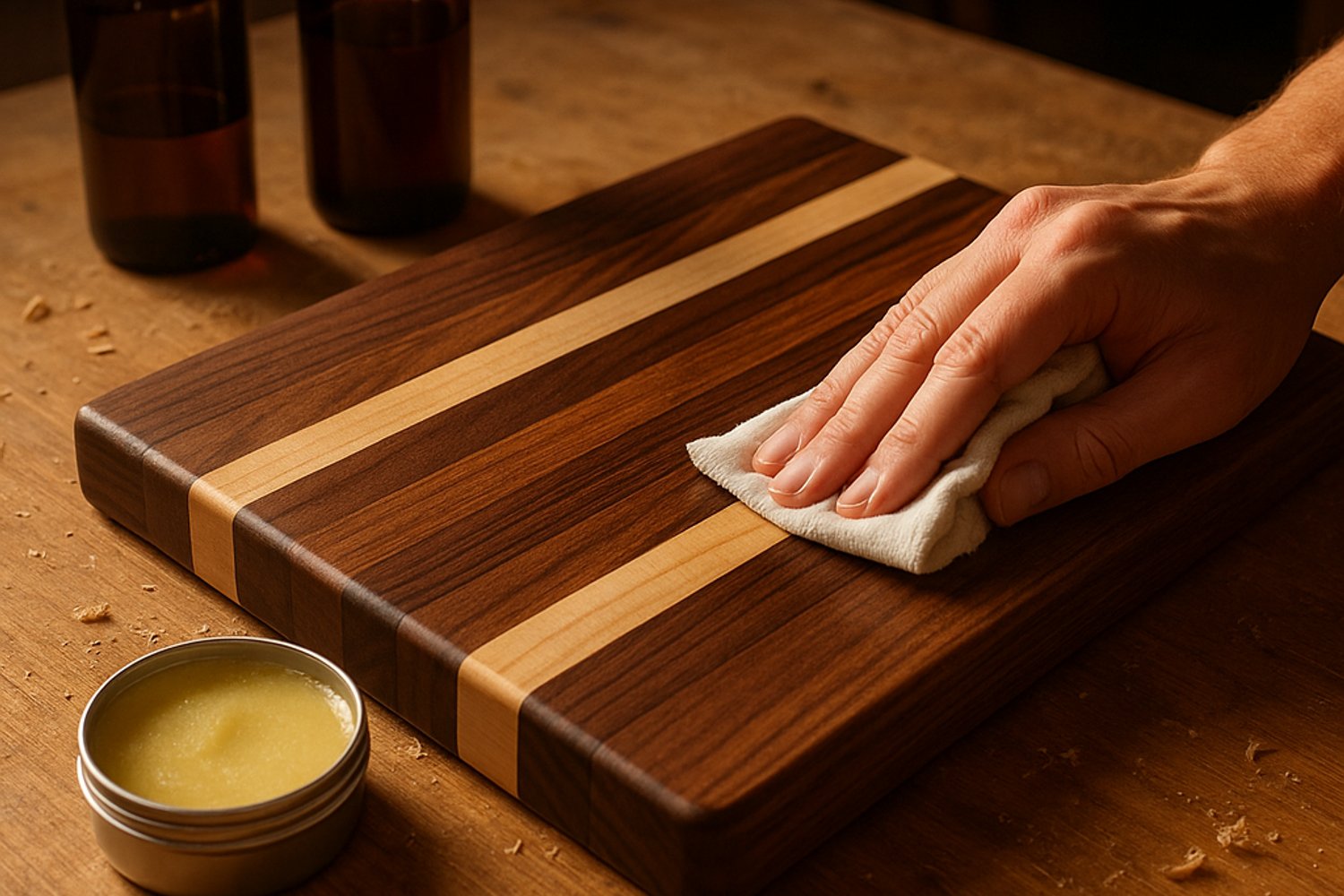
Food-Safe Wood Finishes: What It Really Means for Kitchen Boards
Ask five woodworkers what “food-safe” means and you might hear five different answers. If you’re caring for a walnut or maple cutting board at home—or weighing finishes for a serving board—understanding how finishes behave on wood matters. Here’s a clear, shop-tested guide from our bench at Old Line Woodcraft.
What “food-safe” really means
In practical terms, a finish is considered food-safe when it has fully cured into an inert film or has no reactive ingredients that can transfer to food. That’s different from simply being “non-toxic” in a liquid state, and it’s different from being “dry to the touch.”
Most finishes fall into two camps for kitchen use:
- Non-drying oils and waxes (like mineral oil and beeswax blends) that don’t harden but are safe to contact food and are easy to refresh.
- Drying/polymerizing finishes (like pure tung oil or certain hardwax-oil systems) that chemically cure into a solid film. When fully cured, that film is considered food-safe on surfaces that touch food.
Regulatory bodies don’t “approve” specific brands for cutting boards. Instead, the standard is about ingredients and curing. If a finish is formulated for food-contact or cures to an inert, fully polymerized film, it’s appropriate—provided you follow the manufacturer’s cure times.
Cured vs. dry: the key difference
Dry means the solvents have flashed off and the surface no longer feels wet. Cured means the finish has completed (or nearly completed) its chemical reaction—polymerizing into a stable film.
Why it matters: an oil that’s dry after 12 hours may still be weeks from full cure. Until that point, it can imprint, smell of solvents, or transfer. Wait for the cure window. Simple checks help:
- Smell test: a fully cured finish is essentially odorless.
- Tack test: no tack or fingerprinting under light pressure.
- Time + conditions: follow the label; cooler, humid shops slow cure.
Common food-contact finishes, compared
Here’s how popular options behave on hardwoods like walnut, maple, cherry, hickory, and accent woods such as purpleheart, padauk, canarywood, or leopardwood.
Mineral oil (non-drying): A clear, stable oil that penetrates the surface and enhances grain without forming a film. It won’t cure, so it’s easy to refresh. Great for daily-use cutting boards that see knives and soap-and-water cleanup. Expect to reapply regularly, especially early on.
Oil-and-wax blends: Often called “board butter,” this blends mineral oil with beeswax (sometimes carnauba) to add mild water resistance and a soft luster. Easy to apply, easy to recondition. Ideal for edge-grain and end-grain boards used every day.
Drying oils (pure tung oil, polymerized linseed oil): These cure into a thin, resilient film within the wood. They deepen color on walnut and cherry and bring a subtle glow to pale maple. They require careful, thin coats and full cure times—often several days per coat. On cutting surfaces, many makers still prefer non-drying oil/wax for simpler maintenance.
Hardwax-oil finishes: Modern blends that cure into a low-sheen, durable film with a pleasant, natural feel. They resist staining on serving boards and home décor and can be spot-repaired. For cutting boards, they’ll show knife marks in the film; maintenance is still doable but different than straight oil/wax.
Varnish and polyurethane (film-forming): When fully cured, these finishes are considered food-safe and are widely used on furniture and décor. They add a tougher film and a satin to gloss sheen. For cutting surfaces, thick films are less desirable because knives will scar them; they shine on boxes or home décor where water resistance and easy cleaning matter more than knife resilience.
Which finish where? A quick guide
- Daily prep cutting boards (walnut, maple, cherry, hickory): Use a food-safe oil-and-wax finish or mineral oil. Easy to refresh, friendly to knives, natural matte sheen.
- Serving and charcuterie boards (including accent woods like purpleheart or padauk): Oil-and-wax for a warm, natural look, or consider a hardwax-oil for added stain resistance. Hand-wash only.
- Boxes and home décor: A protective clear finish or hand-rubbed oil finish gives a subtle satin sheen and simple upkeep.
Safety notes and common myths
Myth: “If it’s dry, it’s food-safe.” Not necessarily. Fully cured is the standard, not just dry.
Myth: “Never use a film finish near food.” In reality, a fully cured film finish is considered food-safe. It just isn’t the best choice for a chopping surface because knives damage films.
About linseed oil: “Boiled” linseed oil typically contains metallic driers and is not intended for cutting boards. If you choose linseed, look for a polymerized or raw version specifically suited to food-contact surfaces, and observe full cure times.
Allergies and sensitivities: If you prefer to avoid nut- or seed-derived drying oils, mineral oil and beeswax blends are a straightforward alternative for kitchen boards. Always test finishes on a small area first.
Care basics for oil-and-wax cutting boards
Oil-and-wax boards are easy to live with. A few small habits protect the surface and help the finish keep water out and grain looking lively.
- Wash with mild dish soap, warm water, and a soft sponge. Rinse and dry immediately.
- Stand to dry on edge or prop for airflow. Never soak or put in the dishwasher.
- Recondition when the surface looks pale or feels dry. Apply a thin coat of mineral oil or board butter; let it drink in, then buff dry.
- Deodorize with a light sprinkle of salt and a cut lemon if needed. Rinse and dry, then re-oil.
- Refresh the surface with a quick hand sand (320–400 grit) if it feels rough, then re-oil and buff to a natural matte sheen.
How finishing shapes the look of different woods
Finish choice also sets the tone—literally. Mineral oil and oil-and-wax blends deepen the rich brown of walnut, warm the reddish-brown of cherry, and gently highlight the pale cream of maple. On accent species like purpleheart or padauk, finishes enhance color contrast and bring out linear grain. A protective clear finish on boxes and décor adds a subtle satin sheen while keeping the wood’s character front and center.
How we finish in our shop
For kitchen boards shaped by Old Line Woodcraft artisans, we use a food-safe oil-and-wax finish that’s easy for home cooks to maintain and kind to knives. On boxes and home décor, we select a hand-rubbed oil or protective clear finish to balance clarity, durability, and a grain-forward look. Different pieces call for different approaches; the common thread is careful surface prep and patient, proper curing.
Bringing it all together
Choose a finish based on how the piece will be used: oil-and-wax for boards that meet your chef’s knife every day; a cured, film-forming option for décor that needs wipe-clean resilience. Give any curing finish the time it needs, and your walnut, maple, cherry, or accent-wood piece will reward you with years of steady service.
Curious how these finishes look in real life? Explore our shop for grain-forward examples and finish notes, and come back next week for more hands-on insight from the bench.