
From Raw Lumber to Refined Craft
How Milling and Drying Shape Every Old Line Product
Before a board is glued, shaped, or finished, the most important work has already begun.
At Old Line Woodcraft, the quality of our products is defined long before final assembly. It starts with how raw lumber is milled, dried, and prepared for use. These early steps determine stability, durability, and how a piece will perform years down the road.
This is the foundation of real craftsmanship.
Starting With Rough Lumber
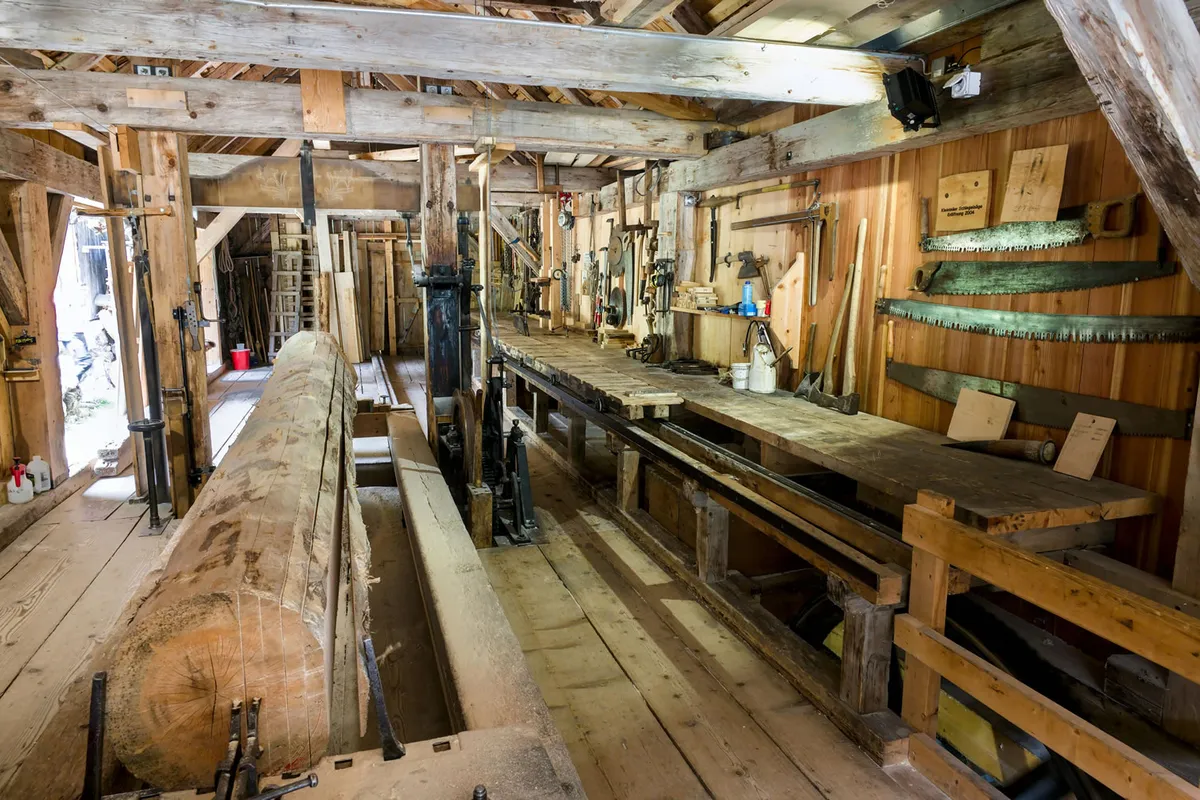
Raw lumber begins its life rough-sawn—uneven, inconsistent in thickness, and full of internal stresses from the tree it came from. At this stage, the wood is far from ready to become a finished product.
Before it can be shaped into anything meaningful, it must be:
- Evaluated for grain orientation and defects
- Cut down to manageable sizes
- Allowed to acclimate to the shop environment
Rushing this step introduces problems that cannot be fixed later.
The Importance of Proper Drying
Wood is hygroscopic—it constantly exchanges moisture with the air around it. If lumber is not dried correctly, it will move, twist, or crack after the product is built.
Air Drying
Freshly cut lumber is often air-dried first:
- Stacked with spacers to allow airflow
- Protected from direct sun and rain
- Left to dry slowly over time
Kiln Drying
After air drying, lumber is kiln-dried to reach a controlled moisture content suitable for indoor use.
The Old Line Standard
At Old Line Woodcraft, we take the long view:
- Lumber is dried properly
- Milling is done deliberately
- Movement is anticipated, not ignored
- Quality is built in from the start
These steps may never be seen, but they are felt every time a product is used.
The Quiet Work Behind Every Piece
The most important parts of craftsmanship often happen before the first visible result. Milling and drying may not be glamorous, but they are what make everything else possible.
It's slow work.
It's deliberate work.
And it's the reason our products perform the way they do.