


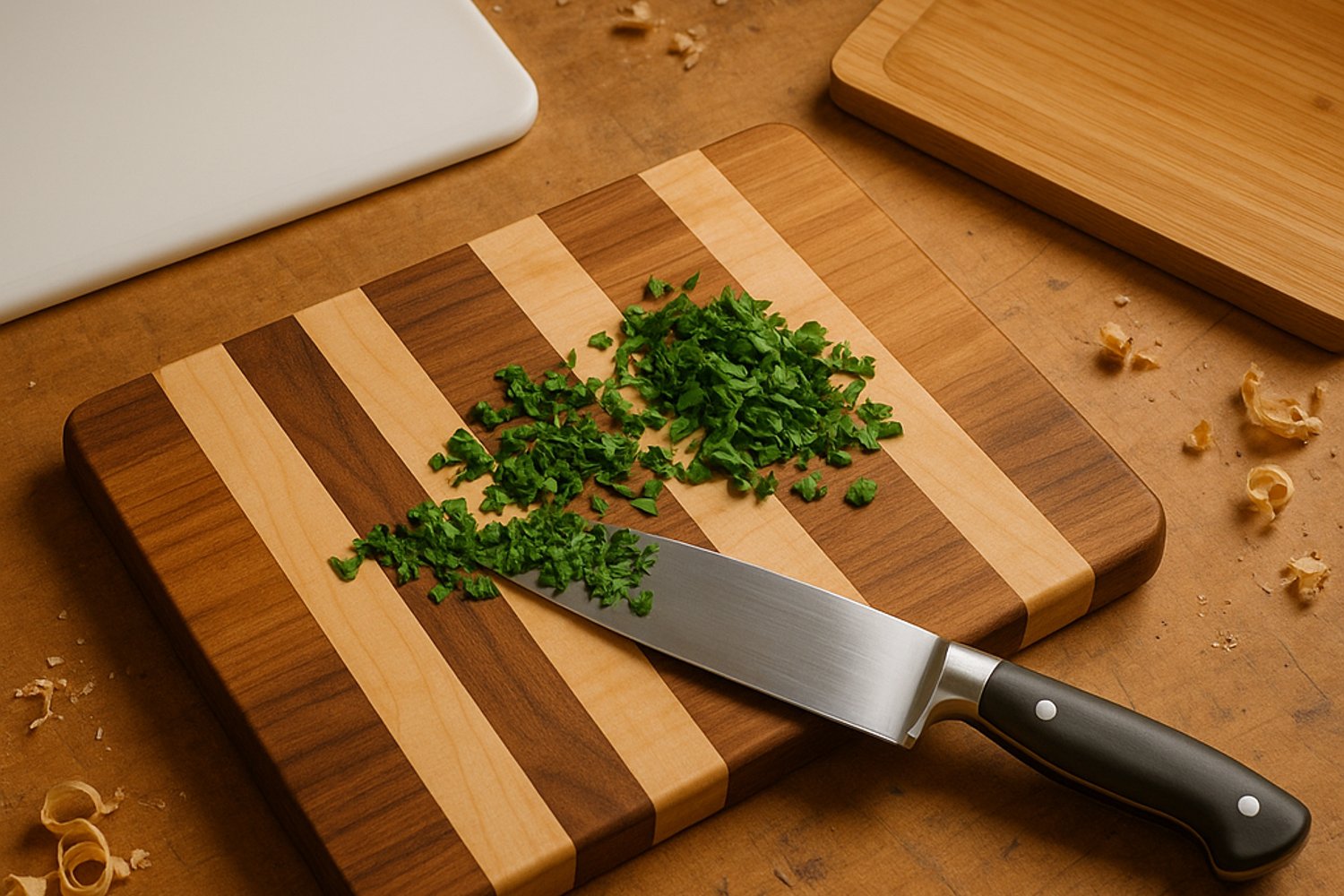
Hardwood vs Plastic vs Bamboo Cutting Boards: What to Use and Why
One board, three materials—very different kitchens
Choosing between hardwood, plastic, and bamboo cutting boards shapes your daily prep more than you might think. Knife sharpness, cleanup time, and how often you replace a board all trace back to material. Here’s a grounded look—from our bench at Old Line Woodcraft—at how these options actually perform and what to consider before your next chop.
What each material really is
Hardwood cutting boards use solid wood. In our shop, that often means pale cream maple with subtle, closed grain; warm reddish-brown cherry with smooth, even grain; rich brown walnut with deep, natural grain movement; or sturdy hickory with visible contrast. Many boards are built in edge-grain orientation (strips aligned with grain running the board’s length) or end-grain orientation (grain facing up in a checker pattern).
Plastic boards are typically polyethylene or polypropylene sheets. They’re uniform, lightweight, and often thin, with bright color options for task separation.
Bamboo boards are laminated grass strips bound with adhesives. They present a linear, uniform look and a noticeably harder, more rigid surface than most domestic hardwoods.
Knife-friendliness and durability
Knife edges last longer on a surface that’s firm but not abrasive. That’s where hardwood shines.
- Hardwood: Edge-grain maple and cherry are gentle on edges and resist deep scarring in everyday prep. End-grain boards go a step further: the upright fibers tend to part under the blade and recover slightly, which helps manage knife marks during heavy chopping. Walnut offers similar forgiveness with a slightly softer feel under the blade.
- Plastic: New plastic feels soft and shows shallow cuts quickly. Over time, those cuts become deeper grooves that collect food residue. The surface can warp from high heat in dishwashers, especially for thin boards.
- Bamboo: Bamboo’s hard, rigid feel can accelerate edge dulling. The compressed fibers and adhesive-lined seams resist cuts but can be harsh on knives and may splinter if abused.
Food safety and cleaning
Clean technique matters more than marketing claims. All three materials can be safe with good habits, but they ask for different care.
- Hardwood: Hand-wash promptly with warm, soapy water, wipe dry, and stand the board on edge to air out both faces. Wood’s fine, closed pores in species like maple and cherry don’t stay wet for long when you dry promptly. A periodic food-safe oil-and-wax finish helps shed moisture and rinses cleanly.
- Plastic: Many plastic boards tolerate the dishwasher, which is convenient for raw proteins. However, once the surface has heavy knife scoring, grooves can be hard to scrub thoroughly. Retire and replace when the surface gets deeply worn.
- Bamboo: Most bamboo boards should be hand-washed and dried promptly; heat and soaking can stress adhesive seams. Light oiling helps, similar to hardwood care.
If you prefer strict separation for raw meats, a color-coded plastic board set dedicated to proteins plus a hardwood board for produce and everyday prep is a practical, common-sense pairing. Many working kitchens do exactly that.
Maintenance: minutes vs. replacements
Hardwood: Oiling is simpler than it sounds. When the board looks dry or water stops beading, wipe on a food-safe oil-and-wax finish, wait, and buff. For most home cooks, that’s every few weeks—or monthly if you’re cooking daily. With basic care, a solid hardwood board can serve for years, and end-grain builds tend to hide wear best.
Plastic: There’s virtually no upkeep beyond cleaning, but replacement cycles are short for frequently used boards. When warping, deep grooves, or lingering odors show up, it’s time to switch out.
Bamboo: Light oiling helps resist swelling at glue lines. Expect a firmer surface feel over time and plan to replace if seams open or the surface splinters.
Sustainability and feel on the counter
Hardwood: Domestic species such as maple, cherry, walnut, and hickory are long-lived, repairable, and have a low visual fatigue factor—the grain looks natural in most kitchens. If a board gets tired, a light sanding and a fresh finish can bring it back. Some cooks also enjoy accent touches in exotic hardwoods like purpleheart, padauk, canarywood, or leopardwood for serving and presentation pieces. The tactile, grain-forward surface is part of the experience.
Plastic: Lightweight and widely available, but made from petroleum-based materials and generally non-repairable. Many end up as trash once worn.
Bamboo: Grows quickly and is widely marketed as eco-friendly, but the product you hold is a resin-bonded laminate. Durability depends on adhesive quality and lamination, which can vary.
Which board fits your kitchen?
- Daily general prep: An edge-grain maple or cherry board offers a forgiving surface, easy maintenance, and stable feel. Walnut provides a darker, warm tone with similar usability.
- Heavy chopping: End-grain hardwood helps manage knife marks and is gentle on edges. Expect a thicker, heavier board that stays put.
- Raw protein handling: Keep a dedicated plastic board you can run through the dishwasher. Pair it with a hardwood board for produce and bread to streamline your workflow.
- Small spaces or quick tasks: A modest-size hardwood prep board handles sandwiches, citrus, and herbs without taking over the counter.
- Serving and presentation: Hardwood shines. Domestic species bring quiet elegance, while accent strips of purpleheart, padauk, canarywood, or leopardwood introduce bold contrast for charcuterie or table-side serving.
Care tips to extend any board’s life
- Wash promptly, dry thoroughly, and store where air can circulate around the board.
- Re-oil hardwood or bamboo when the surface looks dry or feels fuzzy.
- Use the whole surface—don’t carve a deep wear spot in one area.
- Keep boards off hot burners and out of the dishwasher unless they’re plastic-rated for it.
- Refresh hardwood with a light sanding and a food-safe oil-and-wax finish if it starts to look tired.
The balanced take
If we had to distill it: for most home cooks, a solid hardwood cutting board covers 90% of kitchen prep with a great feel under the knife, straightforward care, and years of service. Plastic earns a spot for raw meat tasks and dishwasher convenience. Bamboo fills a middle ground but feels harder on edges and depends heavily on its lamination quality.
In our small shop, we lean on maple, cherry, walnut, and hickory for daily-use boards, and we enjoy introducing accent color with purpleheart, padauk, canarywood, or leopardwood for serving pieces. That mix keeps workhorses on the counter and conversation pieces on the table.
Curious about grain orientation, finishing, or board upkeep? Explore our shop and check back next week for more wood-forward notes from the bench.