


How to Choose a Charcuterie Board: Wood, Size, and Care Tips
Charcuterie night starts long before the first slice of cheese hits the table. The board itself sets the tone: color, grain, and scale all shape how your spread looks and functions. As makers who shape serving boards week in and week out, we’re often asked what really matters when choosing one. Here’s a grounded guide to picking a charcuterie board that looks right, works well, and stays in the rotation for years.
Why the wood species matters (visually and practically)
Wood choice is equal parts appearance and use. The surface you present becomes the backdrop for everything on it—bright cheeses, deep red cured meats, briny olives, and fruit all read differently depending on the board.
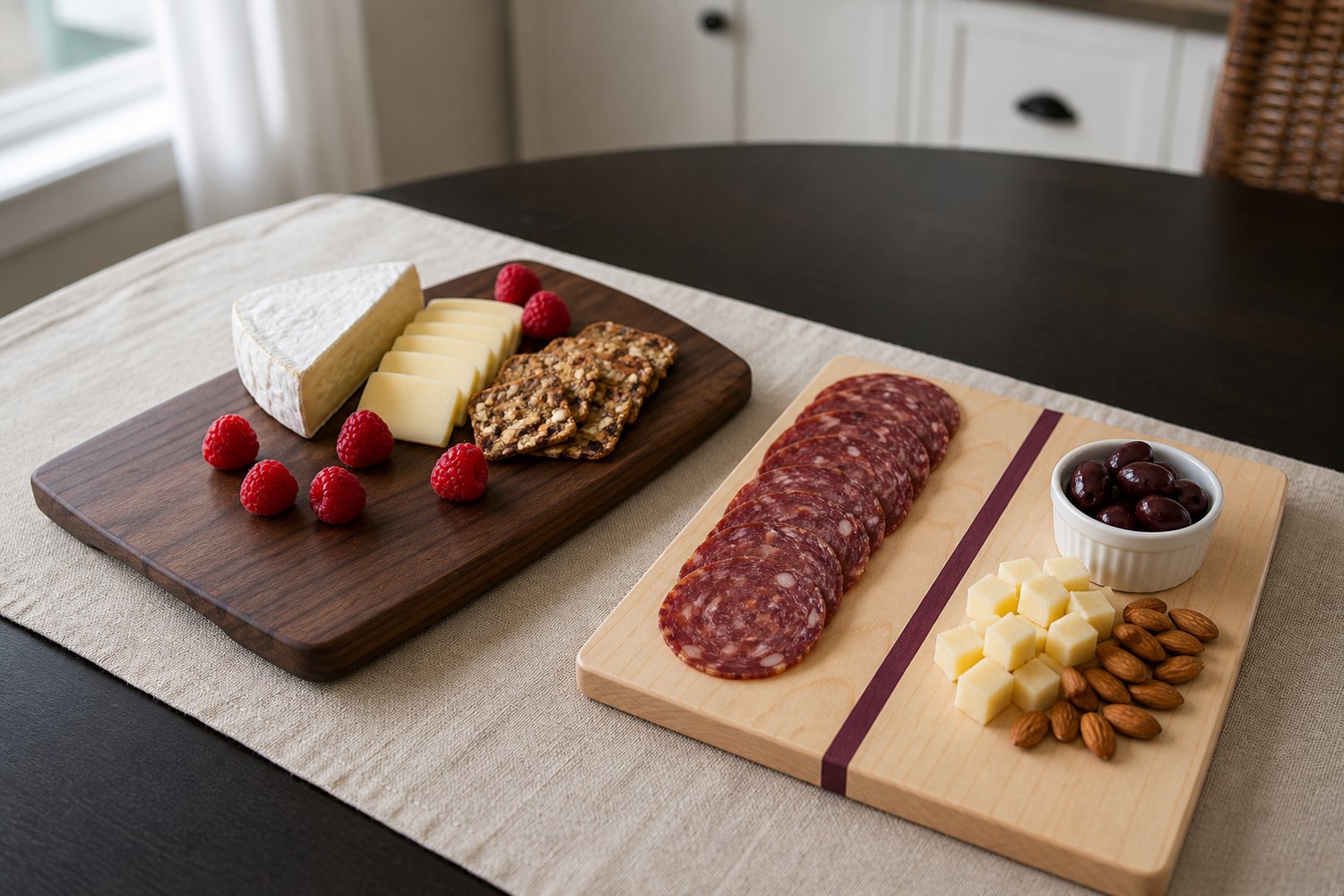
- Walnut offers a rich brown tone with deep, natural grain movement. It sets a dramatic stage and makes pale cheeses and crackers stand out.
- Maple brings a pale cream color with a subtle, closed grain. It reads clean and bright, giving darker salumi and berries strong contrast.
- Cherry starts lighter and moves toward a warm reddish-brown over time. Its smooth, even grain lends a gentle, inviting warmth to the table.
- Hickory leans medium to light with noticeable grain character; it reads rustic yet refined in a serving setting.
- Mahogany presents medium warm tones with calm, straight grain—an easy match with most table settings.
Accent woods add a quiet signature without stealing the show. Thin stripes of purpleheart bring a naturally vivid purple line, while padauk offers orange-red base tones. Canarywood carries golden hues, and leopardwood shows dotted, patterned flecks for subtle visual texture. Used sparingly, these accents can frame the surface or add a guide line for arranging cheeses and meats.
Face grain vs. edge grain for serving
Most charcuterie boards are built with a face-grain surface—what you’d see on the wide face of a board. Face grain shows the most figure and color variation, making it the most visually expressive option for presentation. It’s also smooth and pleasant under small bowls and utensils.
Edge-grain construction (narrow edges laminated upward) is common in cutting boards because it wears well under frequent knife work. If your board will moonlight as a prep surface, an edge-grain serving board offers a good balance: presentable surface, a bit more resistance to light knife marks.
End-grain boards (with the growth rings facing up) are butcher-block territory—excellent for heavy chopping but typically heavier and thicker than a hosting setup needs. For pure charcuterie and cheese service, face grain remains the go-to.
Right-size your board for real tables
Consider how many people you typically host and the table you set. For two to four people, a mid-sized serving board gives you room for a cheese trio, a cured meat, and two or three accents without crowding. For larger gatherings, bigger works—just be mindful of weight and storage.
Thickness is part aesthetics and part function. Slimmer boards look light and are easy to carry; thicker boards feel more substantial and resist cupping when properly constructed. Either way, a flat, stable surface is key.
Useful details that make serving smoother
- Edge profile: A softened perimeter—rounded or chamfered—feels good in the hand and resists dings.
- Handholds: Routed or undercut grips help with carrying when the board is fully loaded.
- Feet or no feet: Silicone or cork feet lift the board slightly and protect tabletops; a flat-bottom board sits closer to the table and can be reversible. Choose based on how you serve and store.
- Finish: A food-safe oil-and-wax finish gives a natural matte sheen and easy maintenance. It’s the standard for serving surfaces.
Styling the spread: use contrast and lines
Let the grain help you compose. On a darker walnut board, lean into pale cheeses and seeded crackers, then punctuate with bright fruit. On a pale maple board, let aged meats and olives anchor the middle for color weight. If the board has a contrasting accent stripe, use it as a subtle divider: cheeses on one side, meats on the other, with pickles and nuts bridging the gap in small bowls.
Leave pockets of negative space. Crowding may look abundant, but breathing room keeps textures crisp and makes serving less fussy. Small ramekins or pinch bowls keep brines and spreads contained while the wood surface stays tidy.
Care and cleaning for a long-serving board
After hosting, wipe the surface with a damp cloth and a drop of mild dish soap. Rinse quickly under running water—no soaking—and towel dry immediately. Stand the board on edge to finish drying so air can circulate around both faces. Keep it out of the dishwasher and away from direct heat or prolonged sunlight.
Refresh the finish as needed. When the surface looks dry or feels rough, apply a light coat of food-safe oil, then follow with a wax blend if you like a slightly richer sheen. Allow it to absorb, buff off the excess, and you’re back in service. Strong aromatics (garlic, onions) can linger; a quick lemon-and-salt scrub followed by a rinse helps neutralize odors on serving days that double as prep days.
Board safety: what belongs on a charcuterie surface
Charcuterie boards are for ready-to-eat foods—cheeses, cured meats, fruit, nuts, and spreads. If you prep raw proteins, use a separate cutting board dedicated to that task. Keeping serving and raw-prep boards distinct is the simplest path to a safe, stress-free evening.
Best wood for a charcuterie board: a practical shortlist
Any stable, well-finished hardwood can serve you well. Here’s how we think about a few:
- Walnut: Rich brown tone; dramatic contrast for pale cheeses and breads; smooth hand-feel.
- Maple: Pale cream surface; clean, bright backdrop that makes deep reds and greens pop.
- Cherry: Warm tone that deepens with time; easygoing grain that pairs with most tableware.
- Hickory: Character-forward grain; a natural fit for rustic or outdoor-inspired spreads.
- Mahogany: Even, medium warmth; quietly refined with a subtle satin presence.
- Accent options: Purpleheart for a vivid purple line, padauk for orange-red contrast, canarywood for golden warmth, or leopardwood for dotted, textural interest.
A quick checklist before you buy or build
- Intended use: pure serving, or occasional light prep?
- Size: does it fit your table and typical guest count?
- Weight and thickness: comfortable to carry when fully loaded?
- Surface: face grain for presentation; edge grain if you’ll slice lightly on it.
- Details: softened edges, comfortable handholds, footed or flat-bottom design.
- Finish: food-safe oil-and-wax, with easy at-home maintenance.
- Style: wood color and any accent stripes that complement your dinnerware.
How we approach serving boards in the shop
In small batches, we laminate carefully selected hardwoods for color harmony and grain flow, shape the perimeter for an easy carry, and hand-sand to a smooth surface that welcomes porcelain bowls and cheese knives. We favor a food-safe oil-and-wax finish that’s simple to refresh at home and lets the natural tone of walnut, maple, cherry, hickory, and mahogany read clearly. When we add accent stripes—purpleheart, padauk, canarywood, or leopardwood—we keep them proportionate so the grain does the talking.
Whether you’re hosting a quiet evening or a lively crowd, the right charcuterie board should make serving easier and the food look inviting—no fuss, just honest materials doing their job well.
Browse our latest work, and come back next week for more shop talk and wood care ideas.