


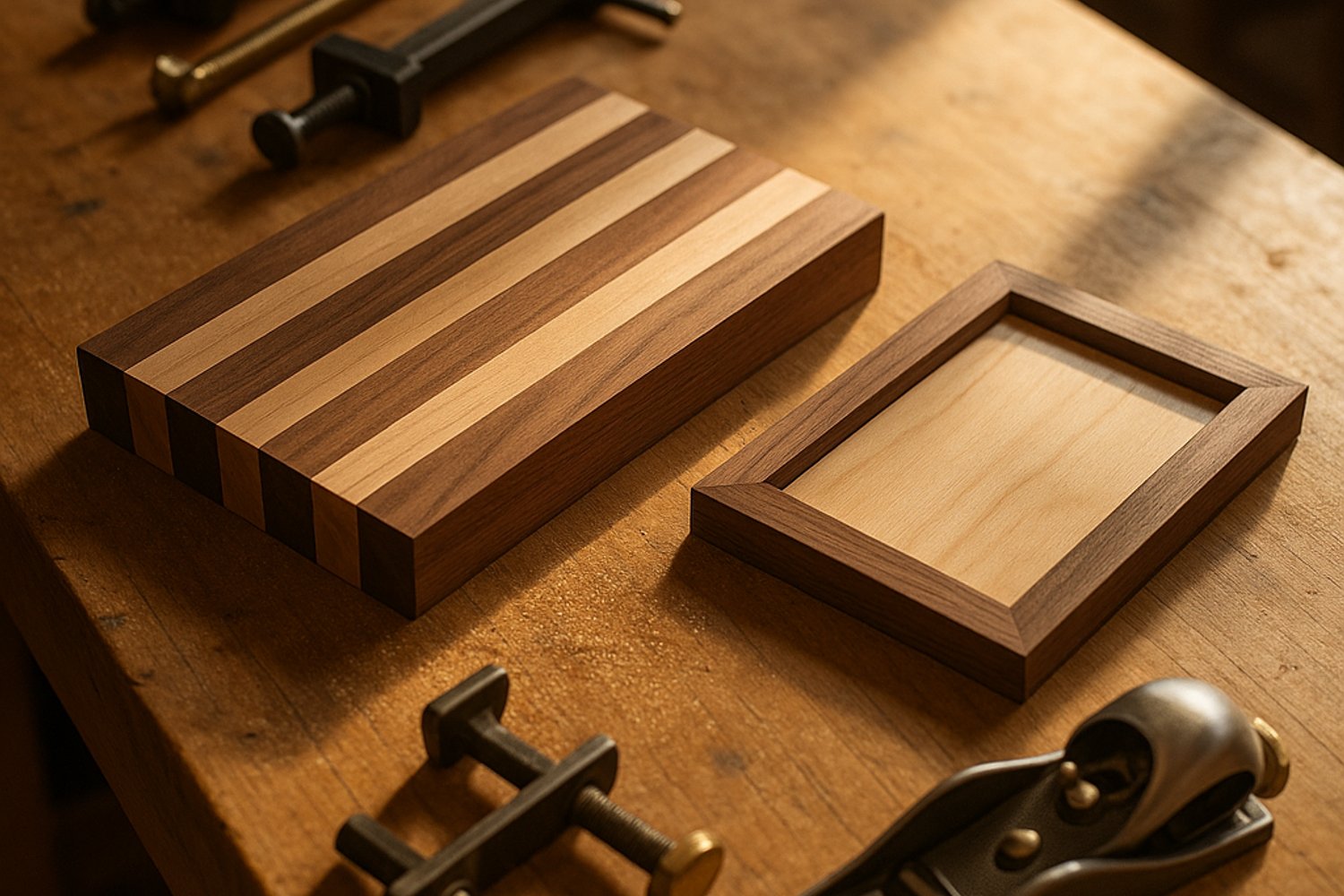
Laminated vs Multi‑Panel Wood Construction: When Each Works Best
One surface, two build paths: why the choice matters
Ever wonder why some solid-wood surfaces look like one unified panel while others are clearly assembled from a few distinct sections or framed with borders? That decision—laminated panel vs. multi-panel construction—shapes how a piece looks, feels, and lives through the seasons. In our small-batch shop, we weigh this choice often for cutting and serving boards, box lids, and wall décor. Here’s how we think it through and what you can look for at home.
What “laminated” means in the shop
In woodworking, a laminated panel is built by edge-gluing multiple strips or boards to create one wider, stable surface. The final piece behaves as a single panel, even though it’s made from several carefully matched parts. Laminated construction lets us control grain direction, color rhythm, and long-grain glue lines for strength.
For kitchen boards, lamination is the backbone of both edge‑grain and end‑grain builds. Think of alternating walnut’s rich brown with pale cream maple, or introducing a warm reddish-brown cherry accent. We might work in a vivid purpleheart stripe or the orange-red tone of padauk for contrast, or a canarywood accent for a lively yellow‑to‑amber band. With lamination, those lines stay crisp and the panel stays strong.
Why we use it: laminated panels excel where a unified, seamless surface is key—daily meal preparation, smooth serving presentation, or a single-piece sign blank ready for engraving. Across our categories (cutting boards, boxes, and home décor), lamination gives predictable stability and a clean, grain-forward look.
What “multi-panel” means—and why it’s different
A multi‑panel construction divides a surface into two or more narrower panels or places a center panel within a border frame. Each section can move with seasonal humidity independently, reducing stress on the whole. It’s common on wider lids and wall pieces where controlling width-related movement is the priority.
Imagine a keepsake box lid: a slim walnut border surrounding a floating maple center panel with subtle, closed grain; or a mahogany frame with a contrasting purpleheart center for bold, uniform color. On wall decor, a framed panel or a design with distinct panel breaks can keep a wide piece flatter through the year while adding visual structure.
Why we use it: multi-panel assemblies manage wood movement by keeping each component narrower across the grain. That reduces cupping risk and minimizes visible seasonal gaps. It also opens up design choices: borders, reveals, and contrasting tones that feel intentional, not accidental.
Wood movement is the decider
All solid wood expands and contracts across the grain as humidity changes. A laminated panel behaves as one wider board; it will still move, just more predictably if the grain is well aligned. A multi-panel or framed panel gives each section room to shift on its own, which can be crucial on wider, display-sized pieces.
We keep three practical questions in mind:
- Width: How wide does the finished surface need to be? Wider surfaces benefit from multi-panel strategies.
- Use: Will this see chopping, sliding dishes, or simply display? Unified surfaces suit heavy use; framed or split panels suit display.
- Finish: Kitchen boards get a food-safe oil‑and‑wax finish; décor and boxes often receive a protective clear finish, which also influences movement and feel.
When laminated construction shines
Cutting and serving boards: Lamination is our go-to. Edge‑grain boards—say, alternating maple’s pale tone with deep walnut—offer a smooth, durable prep surface. End‑grain boards are also laminated, but with the grain turned upright for a resilient, chop‑friendly face. Either way, the glue lines run long-grain to long-grain for strength, then we finish with a food‑safe oil‑and‑wax finish that’s easy to refresh at home.
Box lids (single-panel style): For smaller keepsake boxes, a single laminated panel can be ideal: stable, light, and visually calm. A narrow cherry-and-maple lamination, for instance, reads refined without adding bulk.
Wall signs and décor panels: A laminated sign blank made from matched boards—perhaps a quiet, even-toned maple field with a walnut accent strip—yields a clean engraving surface and an understated grain-forward look.
When multi-panel construction earns its keep
Framed box lids (floating panel): As lids get wider, a border frame surrounding a floating center panel reduces seasonal stress and helps the lid sit flat. A walnut frame with a purpleheart center panel has bold contrast; a mahogany frame with maple inserts has a softer, medium‑warm profile with pale highlights.
Wider wall décor: A large wall piece benefits from multiple narrower panels within a visual grid or a framed center. This breaks up width, manages movement, and adds structure. Canarywood panels, with warm yellow‑orange tones, paired with walnut borders, create a grounded palette with natural contrast.
Mixed-species designs: Certain exotics—like the deep, uniform tone of purpleheart or the orange‑red base of padauk—can be introduced as accent panels within a frame. The defined edges enhance their color and keep the assembly stable.
Build considerations we watch closely
Stock selection: We start with well-acclimated lumber and align boards so the grain movement feels consistent. On laminated builds, consistent grain direction helps the panel act as a unit. On multi-panel builds, each panel’s grain is oriented to minimize cupping.
Glue lines and alignment: For laminated panels, even clamping pressure and tight joints matter more than brute force. We aim for clean, near‑invisible seams that sand flush. On framed or split panels, we leave the center panel room to move, keeping borders steady and gaps minimal.
Thickness and proportion: Cutting boards carry weight and need a comfortable handhold at the edges, so thickness and edge treatment are tuned to feel stable on the counter. Box lids and wall pieces get scaled thinner for balance and a refined profile.
Caring for each construction type
Laminated kitchen boards: Wash promptly with mild soap and warm water, then dry upright with airflow on both faces. Re‑oil with a food‑safe oil‑and‑wax finish as the surface looks dry. Avoid soaking and dishwashers—extended water exposure can stress any wood panel.
Multi-panel lids and décor: Dust with a soft cloth. If finished with a protective clear coat, occasional light cleaning is plenty. Keep all solid-wood pieces away from direct heat blasts or continually damp environments to minimize seasonal stress.
Quick guide: choosing laminated vs multi-panel
- Daily chopping and prep: Laminated panel (edge‑grain or end‑grain) with a food‑safe oil‑and‑wax finish.
- Serving and charcuterie: Laminated panel for a smooth, unified surface and crisp species accents.
- Keepsake box lid, modest width: Single laminated panel for simplicity and clean lines.
- Keepsake box lid, wider format: Multi‑panel or framed center panel for stability and visual structure.
- Wall décor and signs, larger sizes: Framed or multi‑panel layout to manage movement and maintain flatness.
Species notes for design and contrast
Within our material palette, we lean on contrasts that age gracefully. Walnut brings deep, natural brown movement; maple offers pale cream with subtle, closed grain; cherry warms from light to medium amber over time. For bold statements, purpleheart’s consistent purple tone, padauk’s orange‑red base, and canarywood’s vibrant yellow‑to‑amber lend strong accents. Hickory provides light-to-medium natural tones with pronounced character, while mahogany sits in a medium warm range for a balanced look. Leopardwood can add a distinctive visual interest as an accent. Each of these can be used thoughtfully in either laminated or multi-panel builds to emphasize rhythm or structure.
Final thought from the bench
Both laminated and multi‑panel constructions are honest, time‑tested ways to work with solid wood rather than against it. Laminated panels give you a unified work surface with controlled grain and pattern—ideal for boards and streamlined lids. Multi‑panel assemblies let wider pieces breathe and stay composed—useful for framed lids and larger wall décor. If you keep width, use, and finish in mind, you’ll land on the build that serves the piece for years to come.
Curious how these approaches show up in real builds? Browse our latest work and check back next week for more shop notes.