


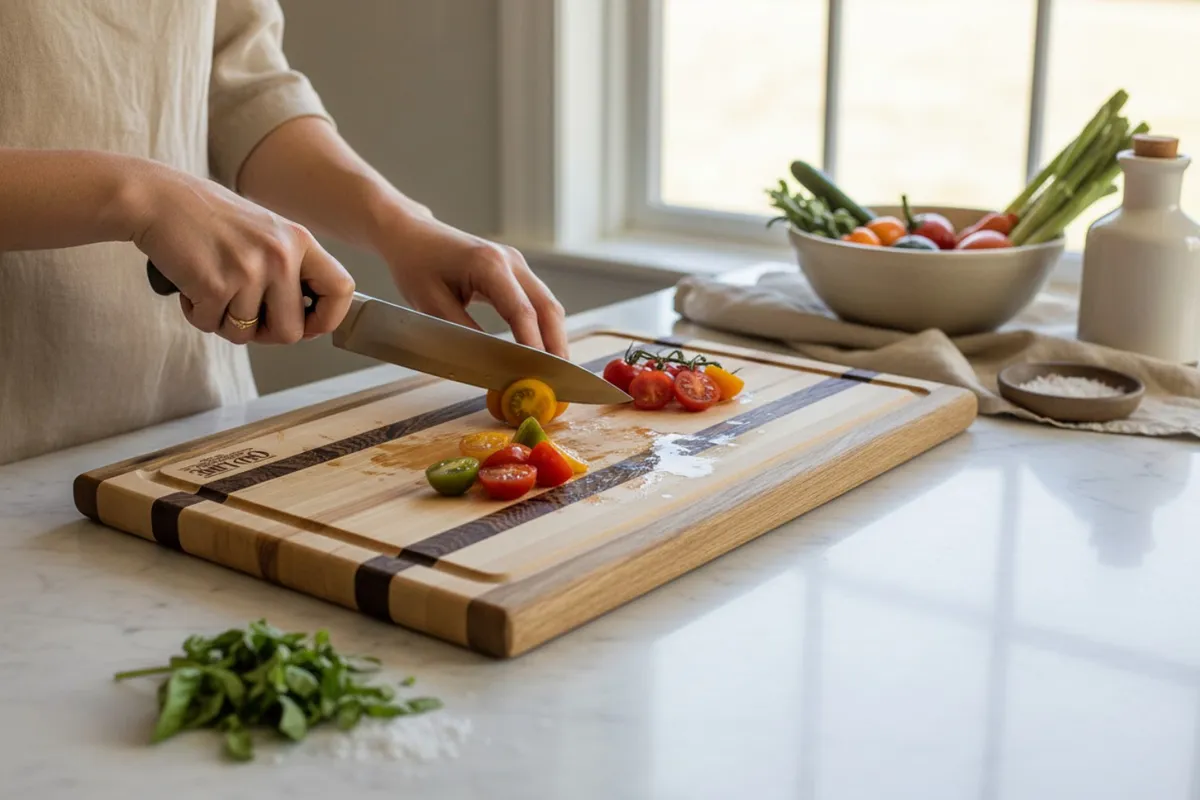
Microplastics in the Kitchen
Why Wood Cutting Boards Are Replacing Plastic
For decades, plastic cutting boards were marketed as the modern, sanitary alternative to wood. Lightweight, inexpensive, and dishwasher-safe, they became a default choice in many kitchens.
Today, that assumption is being reconsidered.
As awareness grows around microplastics and their presence in food preparation, many home cooks and professionals alike are returning to a material that has been trusted for centuries: wood.
What Are Microplastics?
Microplastics are tiny plastic particles—often invisible to the naked eye—created as larger plastic items break down over time. In the kitchen, cutting boards are a common and overlooked source.
Every knife stroke on a plastic board:
- Scores the surface
- Shaves off microscopic plastic fragments
- Introduces those particles directly into food
Once ingested, microplastics accumulate in the body. While long-term health impacts are still being studied, their presence in food has become a growing concern.
The Natural Advantage of Wood
Wood behaves very differently under a knife.
Hardwoods such as maple, walnut, and cherry have a fibrous cellular structure that allows knife edges to slide between fibers rather than severing them completely. This means:
- Fewer loose particles
- No plastic fragments entering food
- Surface fibers naturally close after cutting
In short, wood cuts with the knife rather than against it.
Wood and Food Safety: Clearing the Myth
One of the most persistent myths is that wood cutting boards are less sanitary than plastic. Research has shown the opposite can be true.
Wood's natural properties:
- Draw moisture away from the surface
- Trap and immobilize bacteria within fibers
- Allow bacteria to die off rather than multiply
Plastic boards, by contrast, retain moisture in knife grooves—creating ideal conditions for bacterial growth.
A Return to What Works
Wood cutting boards are not a trend. They are a return to a proven solution—one that aligns health, craftsmanship, and sustainability.
In a world increasingly aware of what we consume, choosing wood is a simple, meaningful step toward a cleaner, more intentional kitchen.