


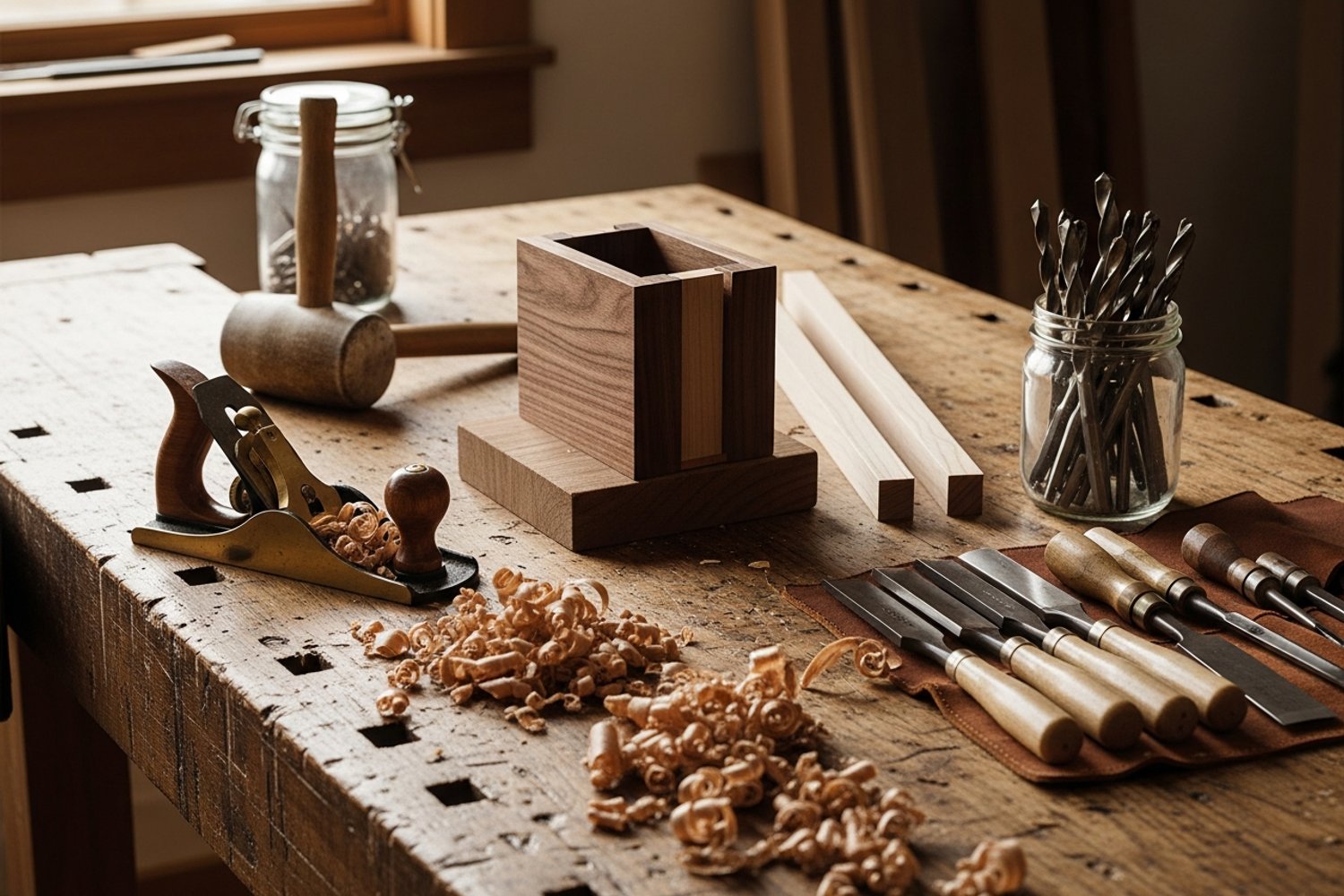
Small-Batch Woodworking: What It Means (and Why It Lasts)
Ever wonder why some hardwood boards stay flat, wear in gracefully, and feel good in the hand year after year? The answer starts long before finish or polish. It’s in the pace we choose. This week, we’re opening up our bench to show what small-batch woodworking actually looks like in practice—and why it often leads to pieces that hold up for the long run.
What small-batch means in the shop
At Old Line Woodcraft, small-batch isn’t a buzzword. It’s a way of working that keeps each decision close to the wood. We move through projects in short runs—sometimes just a handful of cutting boards or a single queue of boxes—so we can react to what the grain is telling us. That slower rhythm gives us space to match boards by color and grain, stage glue-ups with intention, and let parts rest between steps.
Working small also means fewer handoffs. The same set of hands selects lumber, lays out the panel, glues, shapes, and finishes. Subtle choices stack up: how the growth rings orient, where a seam lands, or how a chamfer softens a corner so it feels right in the palm.
Lumber selection: start with honest material
Durability begins with sound stock. We lean on domestic hardwoods like maple, walnut, cherry, hickory, and mahogany, and add thoughtful accents from exotics such as purpleheart, padauk, canarywood, and leopardwood when a design calls for contrast. Each board is chosen for straight, stable grain and consistent tone, then paired so the whole piece reads as one.
Before a single cut, boards acclimate to the shop. That pause lets the wood settle to a steady moisture level. Then we lay out parts with grain direction in mind: maple’s pale, closed grain where you want a smooth cutting surface; walnut’s deep brown areas balanced side to side; cherry’s warm tone aligned so the color shift over time looks even; hickory used where its lively grain can shine without fighting neighboring pieces. For accents, a narrow stripe of purpleheart or padauk can offer crisp color without overpowering the field wood; leopardwood’s bold, flecked figure or canarywood’s golden hues bring visual movement to a décor piece or a box lid.
Glue-ups done right
A strong panel comes from clean, square edges and steady clamping. We joint mating edges for a tight, gap-free fit, then bring pieces together with even pressure. Cauls keep the surface aligned so the board cures flat. There’s no rush here; glue needs time to do its quiet work. Only then do we move on to flattening, shaping, and refining.
For cutting and serving boards, we use edge-grain or end-grain layouts depending on the intended use. Edge-grain offers a smooth, stable surface with a graceful look. End-grain, with its checkerboard of exposed fibers, can be more forgiving to knife edges. In either case, a careful glue-up is the backbone of the piece.
Surface prep and finish that ages well
We bring surfaces to an even, hand-sanded smoothness so the grain reads clearly and takes finish uniformly. For kitchen use, we choose a food-safe oil-and-wax finish that soaks in and can be renewed easily at home. It enhances walnut’s rich brown, deepens cherry’s warm tone, and keeps maple bright without a heavy film.
For boxes and home décor, a protective clear finish or hand-rubbed oil suits the job—highlighting figure and adding a natural sheen that invites touch. The goal is the same across categories: a finish you can live with, and care for, without special equipment.
Why small-batch pieces often last longer
Longevity rarely comes from a single feature. It’s the sum of small decisions made close to the material:
- Grain-aware layout: Aligning growth rings and grain direction reduces internal stresses that can lead to cupping or twist.
- Consistent moisture and rest time: Letting parts acclimate between steps keeps movement predictable across seasons.
- Clean, precise glue lines: Properly prepared joints become stronger than the surrounding wood when cured well.
- Maintainable finishes: Oil-and-wax on cutting boards can be refreshed in minutes, extending service life without stripping or sanding away detail.
- Thoughtful edges and profiles: Chamfered or rounded edges resist chipping and feel better in use.
Mass-produced items can be well-made, but their process is built for speed and uniformity. Small-batch work keeps flexibility at the bench—so if a piece of maple shows unexpected grain runout, we can shift a seam, flip orientation, or substitute a better match. That responsiveness is hard to program into a fast line, and over time it shows up in how a board wears and how a box lid still meets its base cleanly.
How to evaluate a handmade cutting board
Whether you’re in our shop or browsing elsewhere, a quick checklist can tell you a lot about build quality:
- Flatness: Set the board on a truly flat surface and press the corners. Minimal rock is a good sign.
- Glue lines: Look for tight, even seams without visible gaps or glue squeeze-out.
- Grain orientation: Edge-grain or end-grain should run consistently, with no abrupt reversals along the working surface.
- Species clarity: Woods like maple, walnut, cherry, hickory, or mahogany should look intentional and well-matched; accent species such as purpleheart, padauk, canarywood, or leopardwood should be used with restraint.
- Edges and corners: A softened perimeter—rounded or chamfered—helps resist dents and is kinder on hands and countertops.
- Finish: For kitchen use, a food-safe oil-and-wax finish should feel dry to the touch, not tacky.
Boxes and décor: the same principles apply
For a keepsake or jewelry box, inspect the mitered corners: crisp, tight joints signal careful setup. Corner splines, when present, add both structure and a clean design detail—especially when a contrasting species like maple in a walnut box, or purpleheart accents against cherry, is used thoughtfully. Check for a lid that seats without rattle and a smoothly refined surface with a balanced, natural sheen.
In décor pieces, consistency is the thread. A carved bowl or a wall piece should show even surfaces, clean transitions, and a finish that enhances rather than masks the grain. Canarywood’s golden tone, leopardwood’s distinctive figure, or padauk’s orange-red base can become focal points when framed by calmer maple or walnut elements.
Care that respects the material
Good care needn’t be complicated. For cutting and serving boards, hand-wash with mild soap, dry promptly, and reapply a light coat of food-safe oil-and-wax when the surface looks dry. Keep boards off standing water—rubber feet or a drying rack help. For boxes and décor, dust with a soft cloth and avoid harsh cleaners; a touch of quality furniture wax, used sparingly, refreshes the sheen without building up.
When makers build in small batches, they can design with care in mind—choosing finishes that are easy to renew and profiles that stand up to daily use. That’s how a well-made board becomes part of your routine instead of another thing to fuss over.
If you enjoy these behind-the-scenes looks at material and method, explore our shop and browse our latest work. Come back next week for more.