


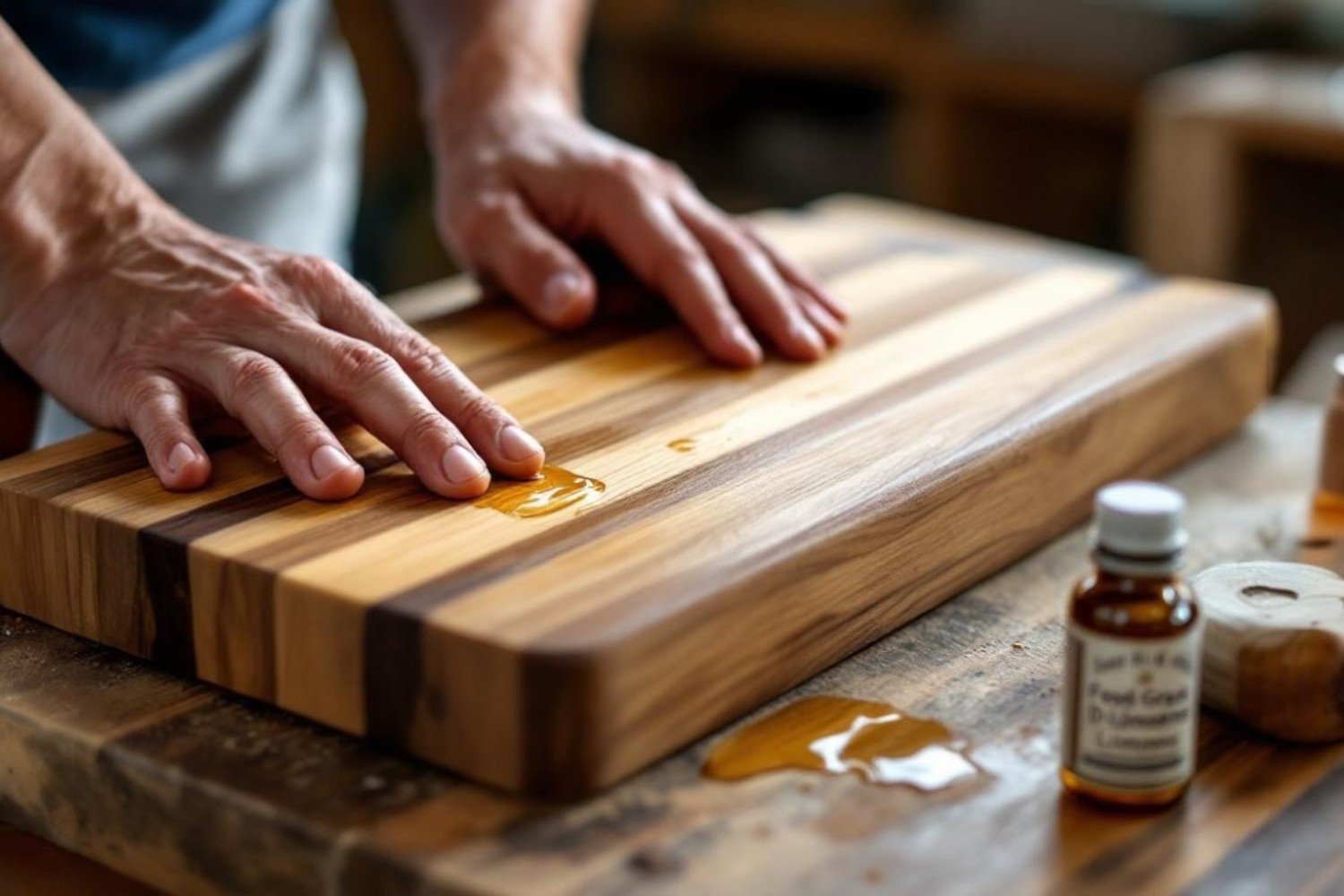
The Natural Finish Guide: Pure Tung Oil and Food-Grade D-Limonene
If you're finishing a cutting board, butcher block, salad bowl, or wooden utensils, the solvent matters as much as the oil. Mineral spirits work beautifully for furniture, but for surfaces that contact food — or for woodworkers who simply prefer plant-based materials — there's a better option: food-grade d-limonene.
D-limonene is a citrus-peel-derived solvent that thins tung oil similarly to mineral spirits, but it's plant-derived, food-grade certified, and biodegradable. This guide walks through the exact process for a tung oil and d-limonene finish, with the slower timing and specific precautions this combination requires.
Why Use D-Limonene Instead of Mineral Spirits?
D-limonene is the primary component of citrus peel oil — the same compound that gives oranges and lemons their scent. Refined to food-grade purity (FCC or USP certified), it's the same material used as a flavoring agent in food and beverages.
For wood finishing, it offers real advantages:
Plant-derived, not petroleum-derived
Food-grade certification is available, which matters for cutting boards and utensils
Pleasant citrus odor rather than petroleum smell
Biodegradable and lower environmental impact
Lower acute inhalation toxicity than aromatic-containing mineral spirits
There are real tradeoffs too — slower cure times, higher cost, and a notable skin sensitization risk that we'll cover in the safety section. For food-contact projects, the tradeoffs are worth it. For general furniture work, mineral spirits is usually the better practical choice.
The Blend Ratios
Mix by volume in a clean glass jar. Use fresh, properly stored food-grade d-limonene — old or oxidized product develops compounds that cause skin allergies (more on this below).
Coat | Tung Oil | D-Limonene | Purpose |
|---|---|---|---|
1st | 1 part | 1 part (50/50) | Maximum penetration into bare wood |
2nd | 2 parts | 1 part (66/33) | Build coat, still penetrating |
3rd | 3 parts | 1 part (75/25) | More build, less thinning |
4th and beyond | 100% tung oil | none | Final build coats |
Mix only what you'll use in a session. D-limonene oxidizes faster than mineral spirits when exposed to air, so smaller batches stay fresher.
Sanding Strategy
Sanding before and between coats matters even more on food-contact surfaces — these pieces will be touched, gripped, and scrubbed for years. The surface needs to feel right and accept finish properly.
Pre-Finish Sanding (by project type)
Project | Final Grit | Notes |
|---|---|---|
Cutting boards (face grain) | 220–320 | Smooth feel, good oil penetration |
Cutting boards (end grain) | 320–400 | End grain raises more; finer final pass needed |
Butcher blocks | 220 | Working surface, refinished often |
Salad bowls and serving pieces | 320–400 | Touched directly, smoothness matters |
Spoons, spatulas, utensils | 400 | Hand-feel is everything |
Children's toys | 320–400 | Smooth, no splinters |
Don't sand above 400 grit before the first coat. Above that, you start burnishing the wood surface and closing the pores — exactly what you don't want with a penetrating finish. The oil needs open wood fibers to soak into.
For end-grain cutting boards specifically, the end grain absorbs much more oil than face grain, so the slight extra smoothness from 320–400 grit doesn't hurt penetration the way it would on face grain.
Always sand with the grain on the final passes. Vacuum thoroughly between grits. Wipe down with a tack cloth or lightly dampened lint-free rag before finishing.
Raise the grain first (recommended for cutting boards): Wipe the sanded surface with a damp cloth, let it dry completely, then lightly sand with the final grit. This raises and removes loose fibers that would otherwise rise on first oil contact, giving you a permanently smoother surface.
Between-Coat Sanding
Light sanding between coats is optional but recommended for cutting boards and utensils where smooth feel is critical:
400 grit sandpaper or gray synthetic steel wool (000 equivalent) — knocks down dust nibs and any raised grain without cutting through the previous coat
Sand lightly with the grain — you're leveling, not removing finish
Wipe clean before the next coat
Wet-Sanding with the Finish (Pro Technique)
On coats 4 and beyond, you can wet-sand with the tung oil mixture itself as a slurry:
Apply the finish, then sand with 600 grit wet/dry paper while the surface is still wet
The sanding creates a fine slurry of oil and wood dust that fills the pores
Wipe clean as normal
Result: a glass-smooth, pore-filled finish that feels exceptional under hand
This technique is especially worthwhile on serving pieces and high-end cutting boards.
Final Polish (Optional)
After the finish has fully cured — at least 6 weeks after the last coat — you can buff the surface with 0000 steel wool or progressively finer wet-sanding (1000–2000 grit) for a satin sheen.
Application Process
1. Prep the Surface
Sand per the strategy above, raise the grain if desired, vacuum thoroughly, and wipe clean with a tack cloth. The wood must be completely dry before finishing.
2. Flood the Surface
Using a clean cotton rag or foam brush, apply the mixture generously and work with the grain. Saturate the wood — don't apply a thin, controlled coat.
3. Let It Dwell
Wait 30 to 45 minutes — notably longer than with mineral spirits. D-limonene evaporates more slowly, which is actually an advantage: the oil has more time to penetrate before the solvent flashes off. Watch for dry spots and re-wet immediately.
4. Wipe Off All Excess
This is the step that makes or breaks the finish. Using clean, dry cotton rags, wipe until the surface feels nearly dry to the touch. Any oil left sitting on top will stay gummy and never cure properly. Wipe with the grain. Change rags as they become saturated.
5. Final Wipe-Down (extra important here)
Come back 60 to 90 minutes after the initial wipe and go over the surface again with a fresh rag. D-limonene's slower evaporation means more weep-back from the pores than you'd see with mineral spirits — don't skip this step.
Cure Times
In good shop conditions (70°F, 50% relative humidity):
Stage | Time |
|---|---|
Touch dry | 18–24 hours |
Recoat (good conditions) | 48 hours minimum |
Recoat (cool/humid conditions) | 72 hours |
Light handling after final coat | 2 weeks |
Full cure | 4–6 weeks |
Food contact | 30 days minimum, ideally 6 weeks |
The smell test: If you can still smell citrus on the wood, the solvent hasn't fully evaporated. Keep waiting. A properly cured finish should smell like wood and oil — not like oranges.
How Many Coats?
Cutting boards and utensils: 4 to 5 coats minimum
Butcher blocks: 5 to 7 coats
Heavy-use food prep surfaces: 7 or more coats
Project Timeline at a Glance
For a standard 5-coat cutting board finish in good conditions:
Day | Activity |
|---|---|
Day 1 | Final sanding, raise grain, coat 1 |
Day 3 | Coat 2 |
Day 5 | Coat 3 (light sand first if desired) |
Day 7 | Coat 4 |
Day 9 | Coat 5 (optional wet-sand technique) |
Days 10–23 | Cure — no food contact |
Days 24–51 | Continued cure; ready for food use at day 30 minimum |
A full butcher block project with 7 coats and proper cure time runs roughly 8–10 weeks from first sanding to first use. Plan accordingly.
Critical Safety
🔥 Spontaneous combustion risk is identical to any oil finish. D-limonene-soaked rags behave the same way as mineral spirits-soaked rags — the tung oil is what generates heat as it cures, not the solvent.
After every session:
Lay rags flat outdoors on concrete or hung over a wire until completely dry and stiff
Or submerge them in water inside a sealed metal container
Never ball them up and toss them in a trash can
🧤 Skin sensitization is more serious with d-limonene than with mineral spirits. D-limonene oxidizes in air to form hydroperoxides — well-documented contact allergens. Repeated skin exposure can cause permanent allergic sensitization.
To minimize risk:
Always wear nitrile gloves during application
Use fresh, properly stored product — old or air-exposed d-limonene has higher hydroperoxide levels
Store tightly sealed in a cool, dark place; use within a year of opening
Ventilate well — pleasant citrus smell does not mean it's safe to inhale heavily
Is the Finish Really Food-Safe?
Yes — once fully cured. Both components are food-safe:
Pure tung oil is FDA-approved for food contact and polymerizes into a stable, inert film
Food-grade d-limonene is GRAS (Generally Recognized as Safe) by the FDA and is used as a flavoring in commercial food products
When sourcing d-limonene, look for FCC (Food Chemicals Codex) or USP certification. Reputable suppliers will provide a Certificate of Analysis on request.
Universal Tips From the Shop
Temperature matters. Aim for 70 to 75°F during application and cure. D-limonene's cure becomes very slow below 65°F.
Humidity matters. 40 to 60% RH is ideal.
Test on scrap first, especially with oily exotics like teak or rosewood.
Decant working amounts into smaller jars and keep the main supply tightly sealed.
Budget for the cost. Food-grade d-limonene runs roughly 5 to 10 times the price of odorless mineral spirits.
Maintenance is part of the finish. Renew with a wipe-on coat of pure tung oil every 6–12 months with regular use.
When to Use This Finish
Tung oil and food-grade d-limonene is the right choice for cutting boards, butcher blocks, salad bowls, wooden utensils, children's toys, and any project where food contact, natural materials, or non-toxic finishes are priorities. For furniture and general woodworking, see our companion guide on tung oil with mineral spirits.
Done right, a tung oil and d-limonene finish on a well-built cutting board can last a lifetime — and unlike polyurethane or epoxy, it can be renewed with a simple wipe-on coat anytime it starts looking dry.