


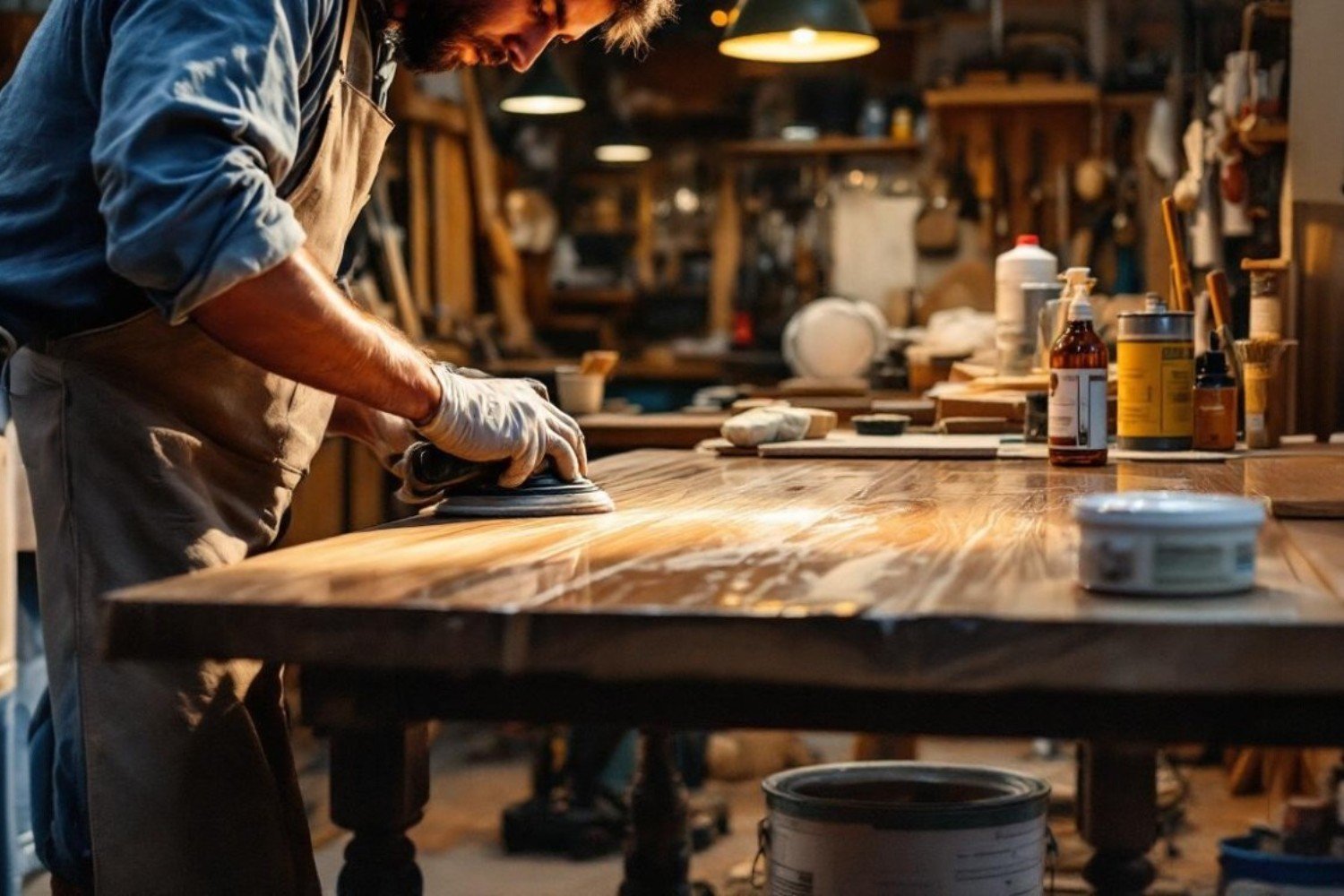
The Complete Guide to Finishing with Pure Tung Oil and Mineral Spirits
Pure tung oil is one of the most beautiful and durable natural finishes available — but straight from the can, it's thick, slow to penetrate, and tricky to work with. The traditional fix is to thin it with mineral spirits for the early coats, letting the oil drive deep into the wood fibers before building up a hand-rubbed finish.
This guide walks through the exact ratios, sanding strategy, application steps, and cure times we use in the shop. Whether you're finishing a walnut tabletop, a set of shaker chairs, or a hardwood floor, the process is the same.
Why Thin Tung Oil at All?
Pure tung oil straight from the bottle has the consistency of warm honey. Applied undiluted to bare wood, most of it sits on the surface where it gets gummy and refuses to cure properly. Thinning with mineral spirits does three things:
Drives the oil deeper into the wood's pores for better adhesion and protection
Speeds initial dry time so you can recoat sooner
Improves leveling for a smoother final surface
The trick is starting heavily thinned and gradually reducing the solvent with each coat — flooding the wood early, then building a richer film as you go.
The Blend Ratios
Mix by volume in a clean glass jar. Use odorless mineral spirits (low-aromatic, ASTM Type II Class C) when possible — it has lower toxicity, less odor, and performs identically to traditional Stoddard solvent.
Coat | Tung Oil | Mineral Spirits | Purpose |
|---|---|---|---|
1st | 1 part | 1 part (50/50) | Maximum penetration into bare wood |
2nd | 2 parts | 1 part (66/33) | Build coat, still penetrating |
3rd | 3 parts | 1 part (75/25) | More build, less thinning |
4th and beyond | 100% tung oil | none | Final build coats |
Mix only what you'll use in a session. Both components store well separately, but pre-mixed batches can skin over and oxidize.
Sanding Strategy
Sanding is where most tung oil finishes are won or lost — before the first drop of finish ever hits the wood. The goal isn't the smoothest possible surface; it's the surface that accepts oil best and feels right under hand.
Pre-Finish Sanding (by wood type)
Wood Type | Examples | Final Grit | Notes |
|---|---|---|---|
Open-grain hardwoods | Oak, ash, walnut, mahogany | 180–220 | Higher grits burnish pores closed and reduce penetration |
Closed-grain hardwoods | Maple, cherry, birch, beech | 220–320 | Can go finer without sealing the wood |
Softwoods | Pine, fir, cedar | 180–220 | Higher grits cause uneven absorption |
Floors | All species | 100–120 | Standard floor finishing practice |
Don't sand above 320 grit before the first coat. This is a common mistake — woodworkers assume finer is always better, but with penetrating finishes the opposite is true. Sanding to 400, 600, or beyond burnishes the wood surface, closes the pores, and prevents the oil from soaking in. You end up with finish sitting on top instead of in the wood.
Always sand with the grain on the final passes. Vacuum thoroughly between grits. Wipe down with a tack cloth or lightly dampened lint-free rag before finishing.
Between-Coat Sanding
Light sanding between coats is optional but improves the final result, especially on coats 2 and beyond:
400 grit sandpaper or gray synthetic steel wool (000 equivalent) — knocks down dust nibs and any raised grain without cutting through the previous coat
Sand lightly, just enough to feel smooth — you're not removing finish, just leveling
Wipe clean before the next coat
Wet-Sanding with the Finish (Pro Technique)
On coats 4 and beyond, you can wet-sand with the tung oil mixture itself as a slurry:
Apply the finish, then sand with 600 grit wet/dry paper while the surface is still wet
The sanding creates a fine slurry of oil and wood dust that fills the pores
Wipe clean as normal
Result: a glass-smooth, pore-filled finish with extraordinary depth
This technique is worth the extra effort on tabletops, jewelry boxes, and showcase pieces.
Final Polish (Optional)
After the finish has fully cured — at least 4 weeks after the last coat — you can buff the surface with 0000 steel wool or progressively finer wet-sanding (1000–2000 grit) for a hand-rubbed satin sheen. This is finishing the finish, not sanding the wood, and it's only worth doing on heirloom-quality work.
Application Process
The same five-step process applies to every coat. The difference between a great finish and a gummy mess is almost always in step four.
1. Prep the Surface
Sand per the strategy above, vacuum thoroughly, and wipe clean with a tack cloth. The wood must be bone dry before finishing.
2. Flood the Surface
Using a clean cotton rag, foam brush, or natural bristle brush, apply the mixture generously and work with the grain. Don't be stingy — you want the wood saturated, not lightly coated.
3. Let It Dwell
Wait 15 to 30 minutes. Watch for dry spots where the wood absorbs the finish completely and re-wet those areas immediately. End grain and softer woods will drink more than face grain and dense hardwoods.
4. Wipe Off All Excess
This is the step that makes or breaks the finish. Using clean, dry cotton rags, wipe the surface until it feels nearly dry to the touch. Any oil left sitting on top will not cure — it will stay gummy indefinitely and ruin the project.
Wipe with the grain. Change rags as they become saturated. Don't rush this step.
5. Final Wipe-Down
Come back 30 to 60 minutes after wiping and go over the surface again with a fresh rag. Tung oil tends to weep back out of the pores, especially on open-grain woods like oak, ash, and walnut. Catching this weep-back prevents glossy spots and uneven sheen.
Cure Times
In good shop conditions (70°F, 50% relative humidity):
Stage | Time |
|---|---|
Touch dry | 8–12 hours |
Recoat (good conditions) | 24 hours minimum |
Recoat (cool/humid conditions) | 48 hours |
Light handling after final coat | 1 week |
Full cure (water resistant, durable) | 2–4 weeks |
Food contact (if applicable) | 30 days minimum |
Cool temperatures and high humidity dramatically extend these windows. Below 60°F, tung oil cures very slowly. Below 50°F, it may not cure at all.
How Many Coats?
Minimum for protection: 3 coats
Standard furniture finish: 4 to 5 coats
Heirloom pieces and high-wear surfaces: 6 to 7 coats
More thin coats always beats fewer thick coats. Each coat builds depth and water resistance.
Project Timeline at a Glance
For a standard 5-coat furniture finish in good conditions:
Day | Activity |
|---|---|
Day 1 | Final sanding, coat 1 |
Day 2 | Coat 2 |
Day 3 | Coat 3 (light sand first if desired) |
Day 4 | Coat 4 |
Day 5 | Coat 5 (optional wet-sand technique) |
Days 6–12 | Cure — light handling only |
Days 13–35 | Continued cure to full hardness |
Critical Safety
🔥 Spontaneous combustion is a real and frequent cause of shop fires. Oil-soaked rags generate heat as the oil oxidizes, and a wadded-up pile of rags in a trash can can self-ignite within hours.
After every session:
Lay rags flat outdoors on concrete or hung over a wire until completely dry and stiff
Or submerge them in water inside a sealed metal container
Never ball them up and toss them in a trash can with other debris
Other precautions:
Wear nitrile gloves — repeated skin contact with mineral spirits causes irritation and dermatitis
Work with good ventilation, especially during the wipe-off phase when solvent evaporation peaks
Keep open flames, pilot lights, and sparks away from the work area
Universal Tips From the Shop
Temperature matters. Aim for 65 to 75°F during application and cure.
Humidity matters. 40 to 60% RH is ideal. High humidity slows tung oil cure significantly.
Test on scrap first, especially with oily exotics like teak, rosewood, or cocobolo — the natural oils can interfere with curing.
More thin coats beats fewer thick coats. Always.
Decant working amounts into smaller jars. Tung oil skins over when exposed to air in a half-empty container.
Be patient. Rushing recoats is the most common reason a tung oil finish fails.
When to Use This Finish
Tung oil and mineral spirits is the right choice for furniture, cabinetry, paneling, hardwood floors, and any project where you want a durable, repairable, hand-rubbed finish with the depth and warmth that only an oil finish can provide. For cutting boards, butcher blocks, and other food-contact surfaces, see our companion guide on tung oil with food-grade d-limonene.
Done right, this finish lasts decades and only gets better with age.