


Walnut vs. Maple Cutting Boards: Which Belongs in Your Kitchen?
Two classics, one choice: walnut or maple?
If you’re weighing walnut vs. maple for a cutting or serving board, you’re already choosing well. Both are dependable domestic hardwoods we reach for daily in the Old Line Woodcraft shop. They just shine in different ways. Here’s a clear, maker-level comparison to help you pick the wood that fits how you prep, serve, and care for your board.
Color and grain: what you see on the counter
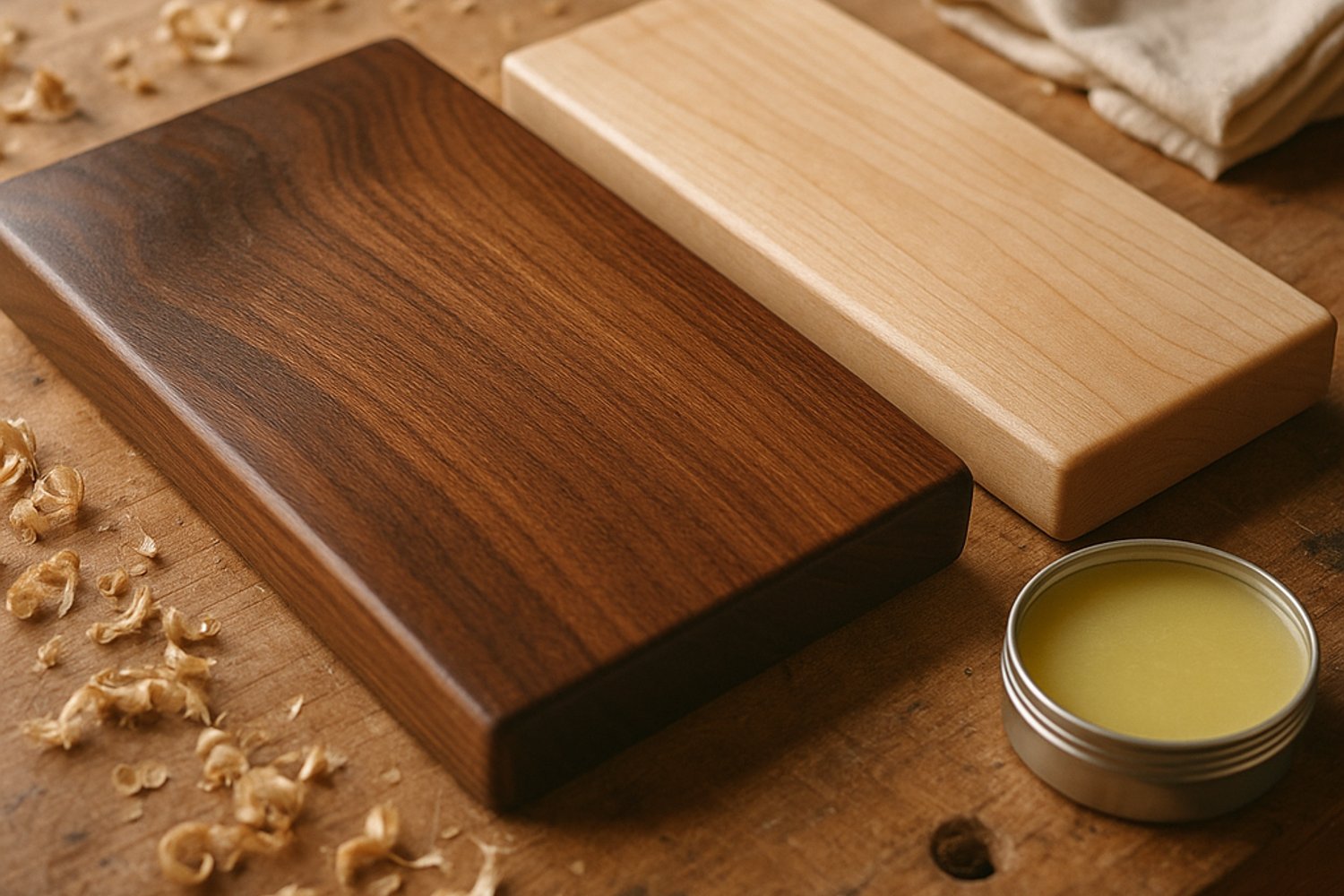
Maple presents as pale cream to light tan with a subtle, closed grain. It reads clean and bright, especially under kitchen lighting. On the table, that light tone frames colorful produce and cheeses with crisp contrast.
Walnut brings deep, natural brown with warm undertones and a gentle grain movement. It looks grounded and rich—an easy way to add warmth to stainless or stone-heavy kitchens. Walnut also visually hides light knife tracks a bit better because marks blend into the darker field.
For serving, both woods make a thoughtful backdrop. Maple emphasizes freshness and color pop; walnut leans cozy and refined. If you entertain often in the evening, walnut’s tone looks especially good by candlelight. Morning light favors maple’s clarity.
Hardness and knife-friendliness
Hardness helps predict how a board feels under the knife and how it wears. Hard maple (sugar maple) sits around 1,450 lbf on the Janka scale. Black walnut averages near 1,010 lbf. On the board, that translates to maple being a touch firmer under the blade and slightly more resistant to denting from heavy chopping.
For knife edges, there’s a sweet spot: you want a surface hard enough to stay flat yet not so hard that it chips or rolls your edge. Both species live firmly in that zone. Walnut’s slightly lower hardness can feel a bit kinder to knives over long sessions, while maple returns a crisper, firmer feedback that many cooks like for precise slicing.
Grain orientation matters too. An end-grain pattern (think butcher block) lets knife edges slip between fibers, showing less wear over time. An edge-grain orientation offers a sleeker look and lighter weight with excellent day-to-day performance. Whether you choose walnut or maple, board orientation will influence longevity as much as species.
Durability and wear patterns
In daily use, maple’s higher hardness gives it a slight edge in abrasion resistance. It resists scuffing and denting from heavy cookware or dropped utensils. Walnut compresses a little more under point loads, which can help it recover from minor impressions after a re-oil, but you may notice shallow marks sooner if you’re doing frequent, heavy chopping.
Both species take a smooth, hand-sanded surface and hold a food-safe oil-and-wax finish well. Over time, as the finish is renewed, walnut’s darker tone helps downplay accumulated knife trails. Maple’s light color can make early scratches more visible, but that same lightness makes it easy to see exactly where to sand when refreshing the surface.
Sanitation, pores, and cleaning
Maple’s closed, diffuse-porous structure has long made it a go-to for cutting boards. Walnut is comparatively open but still fine-grained and suitable for kitchen use with proper care. In practice, sound cleaning habits matter far more than minute pore differences.
After prep, wash with warm water and a mild soap, then dry upright so air reaches both faces. Avoid soaking and never run a hardwood board through the dishwasher—heat and prolonged moisture can warp even the best-built board. To lift odors from garlic or onion, a baking soda paste works well and is gentle on finishes.
Weight, stability, and worktop feel
Maple is typically a bit denser than walnut, so two similar-sized boards may feel different in the hand. A maple edge-grain board tends to feel slightly heavier and firmer on the counter. Walnut of the same size will be a touch lighter and easier to move between sink and prep area. Both species offer excellent stability when the board is properly constructed and sealed on all sides.
Finish and patina over time
Under a natural, food-safe oil-and-wax blend, maple slowly ambers, taking on a warmer honey tone. Walnut, by contrast, often lightens modestly from fresh, deep chocolate toward a mellow mid-brown while retaining its characteristic richness. Regular maintenance keeps both looking lively.
Expect a working board to develop a lived-in surface—the good kind of patina—especially along your go-to chopping zones. With maple, that patina reads as gentle warmth; with walnut, as softened depth. Both respond well to periodic refreshes.
When to choose maple
Choose maple if you like a bright, minimal look and crisp knife feedback. It’s a reliable pick for daily meal preparation where precise slicing and fine dicing happen often. Maple also shines for charcuterie presentation when you want colors to pop against a clean, light background.
When to choose walnut
Pick walnut if you prefer a warmer, more grounding presence on the counter and a slightly cushioned feel under the blade. Walnut is an easy win for serving and hosting—it reads inviting on the table and tends to hide light surface wear between maintenance sessions.
Care tips that work for both woods
Simple habits will keep either board in top shape. Here’s the routine we recommend in the shop:
- Wash promptly with warm water and mild soap; rinse and dry immediately.
- Stand the board on edge to dry so both faces release moisture evenly.
- Re-oil when the surface looks dry or water stops beading—usually every few weeks in active kitchens.
- Use a food-safe oil-and-wax finish to replenish sheen and moisture resistance.
- For shallow knife marks, hand-sand with the grain (start around 220 grit), remove dust, then re-oil.
- Assign one face for proteins and the other for produce to simplify cleaning routines.
- Avoid extreme heat, soaking, and harsh chemicals that strip finish.
Edge-grain, end-grain, or serving board?
Your use case should steer board orientation as much as wood choice. For heavy chopping, an end-grain pattern excels at long-term wear. For balanced daily prep with a lighter feel, edge-grain orientation is a strong, stable option. For table-side serving boards, a smooth face-grain presentation brings out the wood’s figure and color.
Maple and walnut perform well in all three roles when built with solid hardwood construction, a carefully refined surface, and a sealed perimeter—details the makers at Old Line Woodcraft pay close attention to during every build.
The maker’s takeaway
You can’t go wrong with either species. Choose maple if you want bright, firm, and crisp. Choose walnut if you lean warm, forgiving, and quietly refined. Match the orientation to your cooking style, keep a steady maintenance routine, and your board will serve for years—gaining character with every meal.
If you’re still deciding, visit often and handle both woods in person when you can. Different kitchens, different light, and different hands all tell their own story. Explore our shop and come back next week for more shop-floor knowledge.